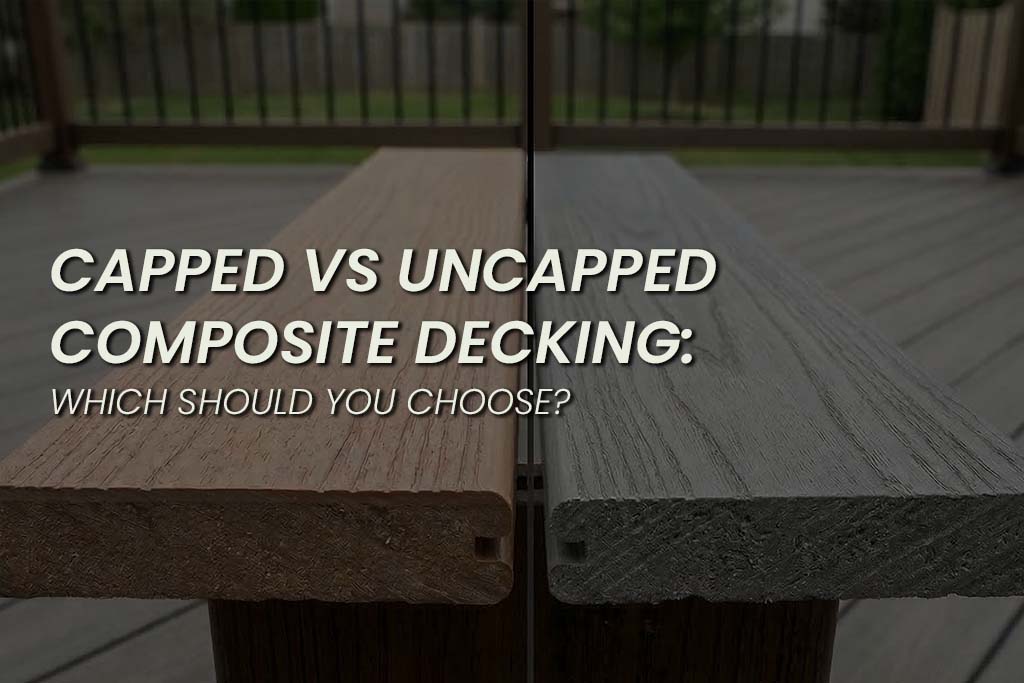
Not all composite decking is the same. The biggest difference between composite boards comes down to one thing: whether they have a protective outer cap or not. This distinction affects everything from durability and appearance to cost and warranty coverage.
If you’re comparing composite decking options in Australia, understanding the difference between capped and uncapped boards is one of the most important decisions you’ll make. This guide breaks down exactly how they differ, what each costs, and which is the better investment for Australian conditions.
What Is Composite Decking? — Complete Guide →
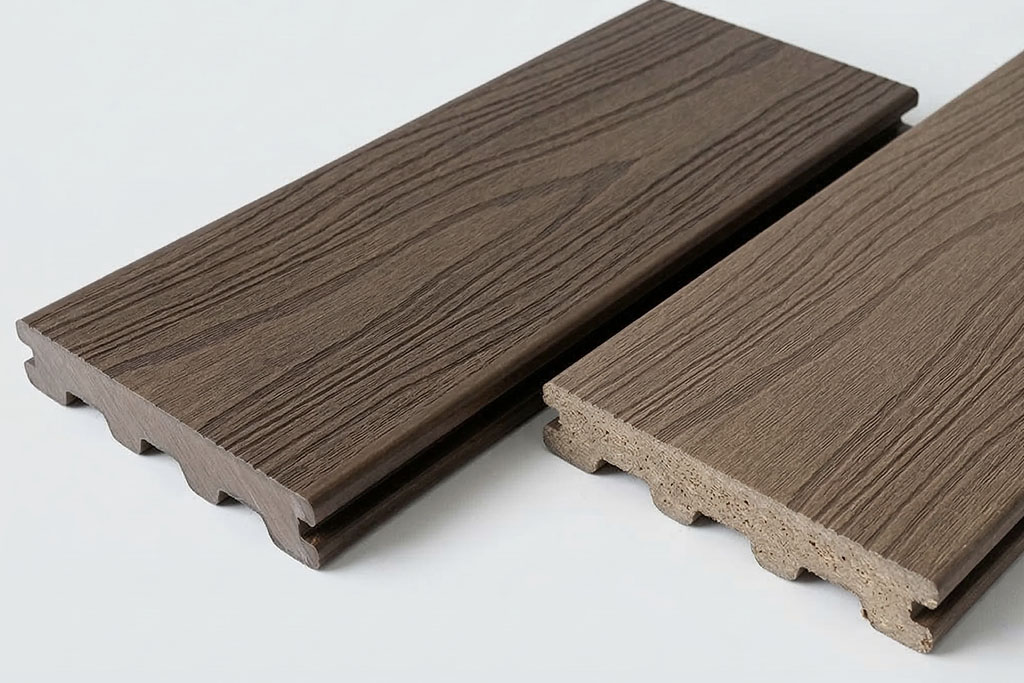
What Is Uncapped Composite Decking?
Uncapped composite decking — sometimes called first-generation composite — is the original technology. These boards are made from a uniform blend of wood fibres and plastic polymers throughout, with no protective outer layer.
When composite decking first hit the Australian market, all boards were uncapped. While they were a step up from timber in terms of termite resistance and structural consistency, they shared some of timber’s weaknesses: susceptibility to staining, moisture absorption, and surface degradation over time.
How Uncapped Boards Are Made
Wood fibres (typically 50–60%) are blended with recycled polyethylene plastic and binding agents, then extruded into board profiles. The resulting material is the same composition from core to surface. Without a protective shell, the wood fibres at the surface are exposed to moisture, UV, and organic matter.
What Is Capped Composite Decking?
Capped composite decking features the same wood-plastic core but wraps it in a protective polymer shell — typically made from PVC, polyethylene, or advanced ASA (Acrylonitrile Styrene Acrylate). This cap layer acts as a shield, preventing moisture, UV rays, and stains from reaching the wood fibres inside.
Think of it like the difference between a bare timber post and one that’s been sealed and painted. The underlying material is similar, but the protective layer changes the performance dramatically.
Types of Capping
Standard capped: A polymer shell wraps around the top and sides of the board to protect the exposed surface.
ASA co-extruded (premium capped): An advanced dual-layer cap using Acrylonitrile Styrene Acrylate. ASA is widely considered one of the most advanced cap materials available, offering exceptional UV, stain and scratch resistance. This is the technology used in premium ranges like our NextGen Titanium series.
Compare Our Composite Decking Ranges →
Head-to-Head Comparison
| Factor | Uncapped | Capped |
| Price per m² | $50–$100 | $100–$250 |
| UV Resistance | Low — fades significantly | High — warranted fade protection |
| Stain Resistance | Low — absorbs spills | High — surface repels stains |
| Moisture Absorption | Moderate — can swell | Minimal — cap seals core |
| Scratch Resistance | Low | Advanced |
| Mould/Mildew | More susceptible | Highly resistant |
| Warranty | 5–10 years | 15–30 years |
| Appearance Over Time | Degrades noticeably | Maintains colour and texture |
| Best For | Tight budgets, covered areas | All Australian conditions |
Why Capping Matters in Australia
Australia’s climate is one of the harshest in the world for outdoor building materials. The combination of intense UV radiation, temperature extremes, coastal salt air, and subtropical humidity means that any exposed wood fibre will degrade faster here than in milder climates.
This is exactly why capping makes such a significant difference in Australian conditions:
UV Protection
Australia receives some of the highest UV levels on the planet. Uncapped composite boards lack dedicated UV shielding, which means the wood fibres at the surface break down and fade quickly — often within 2–3 years. Capped boards include UV stabilisers in the cap layer that are warranted to resist significant fading for 15–30 years.
Moisture and Humidity
In coastal regions and subtropical areas like Brisbane, the Gold Coast, and Far North Queensland, moisture is a constant challenge. Uncapped boards can absorb moisture through the surface, leading to swelling, warping, and mould growth. The sealed surface of capped boards prevents moisture penetration, making them far better suited to humid and coastal environments.
Stain Resistance
Outdoor decks are exposed to everything from red wine and BBQ grease to leaf tannins and bird droppings. Uncapped boards absorb these stains because the wood fibres at the surface act like a sponge. Capped boards have a non-porous surface that allows most spills to be wiped away without staining.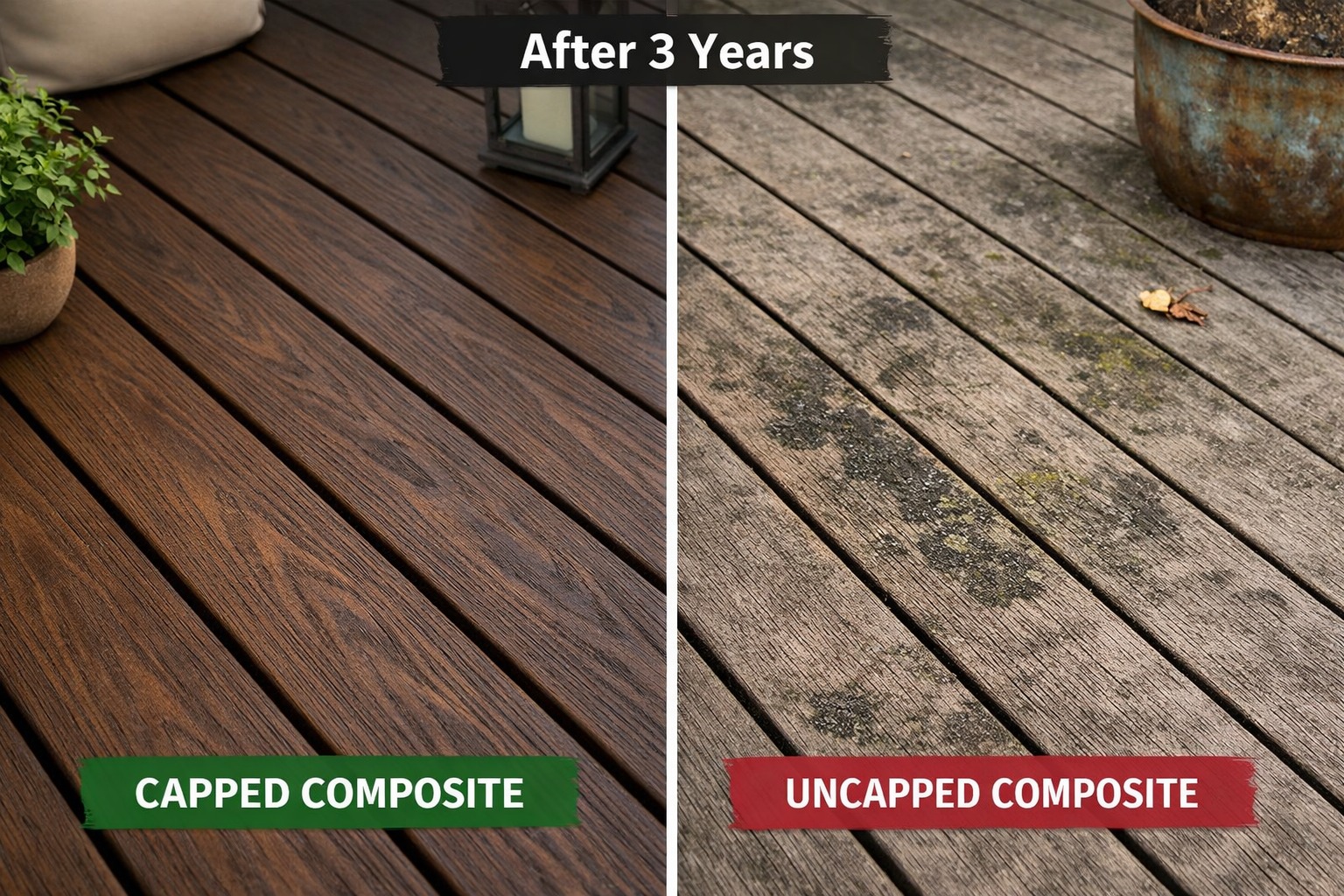
Composite Decking Maintenance Guide →
Cost Comparison: Is Capped Worth the Extra Investment?
Capped composite typically costs 50–150% more than uncapped per square metre. For a standard 25m² deck, that’s roughly $1,250–$3,750 more in material costs. However, the total cost picture looks very different when you factor in longevity and performance.
| Cost Factor (25m² Deck) | Uncapped | Capped |
| Material cost | $1,250–$2,500 | $2,500–$6,250 |
| Expected lifespan | 8–15 years | 25–30+ years |
| Replacement likelihood | High (within 15 years) | Low |
| Warranty coverage | 5–10 years | 15–30 years |
| Cost per year of life | $4–$8/m² per year | $3.30–$8.30/m² per year |
When you calculate cost per year of usable life, capped composite is comparable to — or cheaper than — uncapped. And that’s before you consider the cost and disruption of replacing a failed deck mid-life.
[INTERNAL LINK: Composite Decking Cost Guide 2026 →]
Use Our Price Calculator for an Instant Estimate →
Our Recommendation
For most Australian outdoor decks, capped composite boards provide significantly better long-term performance. The savings at purchase don’t justify the trade-offs in durability, appearance, and warranty coverage — especially given Australia’s harsh UV and variable climate.
For most residential projects, mid-range capped composite ($100–$180/m²) offers the best balance of performance and value. If your deck is in a high-exposure location — full sun, poolside, coastal — or you simply want the longest-lasting result, premium ASA-capped boards ($150–$250/m²) are the strongest investment.
If budget is genuinely tight, uncapped composite can still work in covered or semi-sheltered areas where UV and moisture exposure are limited. But for any deck that’s exposed to the elements, capped is the clear winner.
Request Free Samples — See the Difference for Yourself →
Frequently Asked Questions
Can you tell the difference between capped and uncapped by looking at them?
When new, the difference can be subtle. Capped boards tend to have a slightly smoother, more uniform finish with more realistic wood grain embossing. The real difference becomes obvious over time — uncapped boards fade and weather noticeably faster.
Is all capped composite decking the same quality?
No. There’s a significant quality range within capped products. Standard polymer caps offer good protection, but premium ASA (Acrylonitrile Styrene Acrylate) caps provide substantially better UV, scratch, and fade resistance. Always check the specific cap material and warranty terms.
Can uncapped composite be sealed or coated to improve performance?
Some manufacturers suggest applying a sealant to uncapped boards, but this adds ongoing maintenance and cost — which defeats one of the main advantages of choosing composite over timber. A better approach is to invest in capped boards from the start.
Do both types install the same way?
Yes, installation methods are essentially identical for capped and uncapped composite. Most modern installations use hidden fastening systems. The main difference is that some premium capped boards come with proprietary clip systems specific to that product range.
Composite Decking Installation Guide →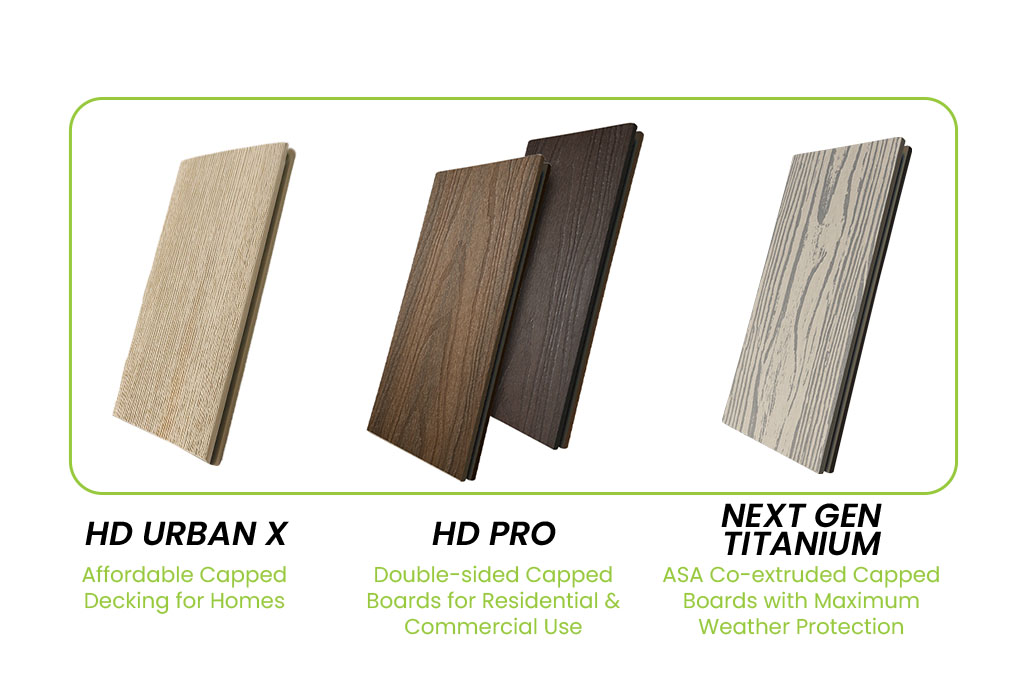
Choose the Right Composite for Your Project
Compared with timber decking, both capped and uncapped composite offer significantly lower maintenance and better dimensional stability.
At Brite Decking, our composite decking ranges all feature capped technology designed for Australian conditions.
- HD Urban X – affordable capped composite designed for residential decks
- HD PRO – double-sided capped boards suited to residential and commercial installations
- NextGen Titanium – ASA co-extruded capped boards offering the highest weather protection.