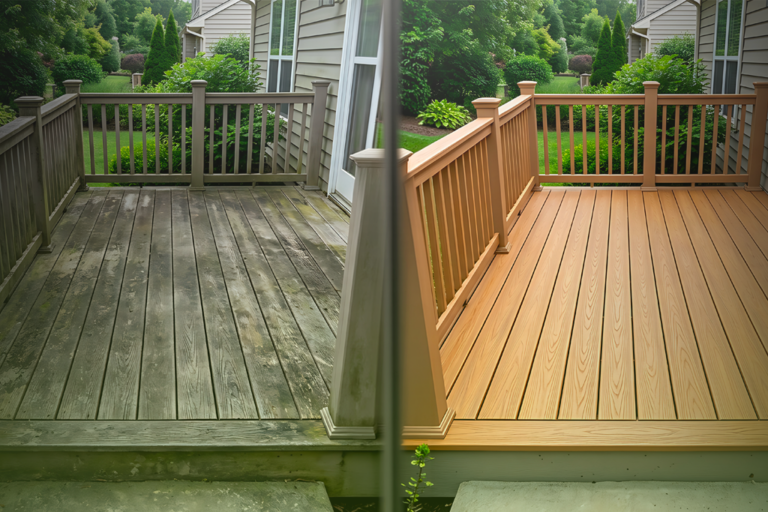
Keeping a composite deck clean is straightforward — far easier than maintaining timber. But using the wrong products or techniques can damage the surface, void your warranty, or leave the deck looking worse than before. This guide covers exactly how to clean composite decking for every situation you’ll encounter, from routine washes to stubborn stain removal, using the right tools and products for Australian conditions.
Most modern capped boards, including Brite Decking’s Urban X, HD PRO and NextGen Titanium ranges, are designed with a protective outer layer that resists staining and makes routine cleaning straightforward.
Composite Decking Maintenance — Full Guide →
What You’ll Need
Before you start, gather the right tools and products. Using the correct equipment makes the job faster and protects your deck surface.
Essential Cleaning Kit
Soft-bristle brush or broom: A standard outdoor broom with soft synthetic bristles is ideal for routine sweeping and scrubbing. Avoid wire brushes or stiff natural bristle brushes — they can scratch the surface of capped composite boards.
Garden hose with spray nozzle: A standard garden hose handles most rinsing. A nozzle with an adjustable spray pattern helps with tougher spots. You don’t need a pressure washer for routine cleaning.
Bucket: For mixing cleaning solution.
Mild dish soap or composite deck cleaner: Standard dish soap (a small amount in warm water) works for routine cleaning. For deeper cleans or specific stains, a dedicated composite deck cleaner is more effective. More on product selection below.
Because capped composite boards are non-porous, dirt and stains generally sit on the surface rather than absorbing into the board, making them easier to remove compared to timber.
Rubber gloves: Especially when using specialised cleaning products.
Optional but Useful
Pressure washer: Useful for annual deep cleans or large deck areas, but must be used carefully. See our pressure washing section below.
Plastic putty knife or spatula: For gently lifting dried-on debris like food, bird droppings, or tree sap without scratching the surface.
Spray bottle: Handy for applying cleaning solutions directly to stains.
Routine Cleaning: The Basic Wash
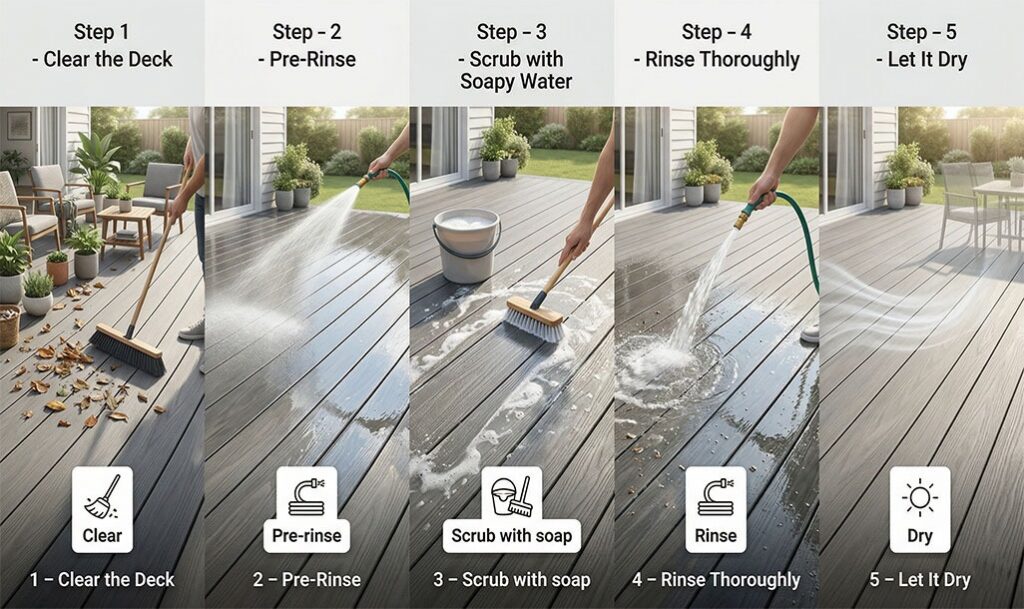
This is your standard clean — the one you’ll do regularly to keep the deck looking good. It takes about 20–30 minutes for an average-sized deck and should be done every 1–2 months, or more frequently if your deck is under trees or near a BBQ area.
Step 1: Clear the Deck
Move furniture, pots, and accessories off the deck surface. Sweep away loose leaves, dirt, and debris. Pay attention to gaps between boards where debris accumulates — a thin plastic scraper or old credit card works well to clear the grooves.
Step 2: Pre-Rinse
Hose the entire deck surface with plain water to wet the boards and loosen surface dirt. Start from the house end and work outward so dirty water flows away from the building.
Step 3: Scrub with Soapy Water
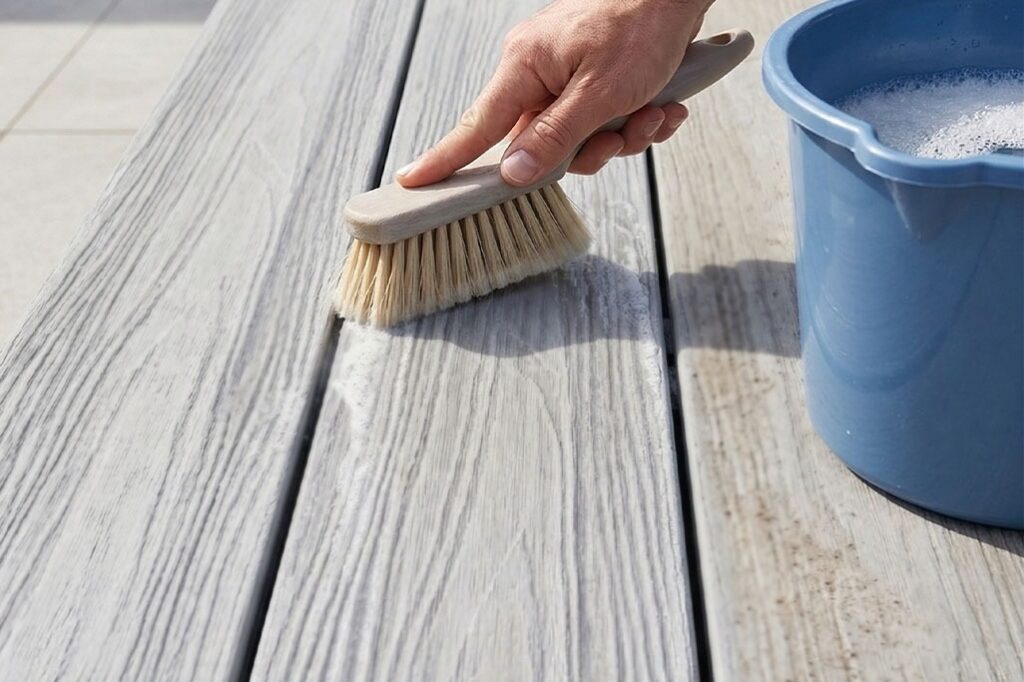
Fill a bucket with warm water and add a few squirts of mild dish soap or your chosen composite deck cleaner diluted per the label instructions. Working in manageable sections (about 2m x 2m), apply the solution and scrub with your soft-bristle brush. Always scrub in the direction of the board grain — never across it. This follows the textured surface pattern and prevents any chance of marring the finish.
Step 4: Rinse Thoroughly
Rinse each section with the hose before moving to the next. Don’t let the cleaning solution dry on the surface, especially in direct sun — it can leave residue marks. A thorough rinse is important because soap residue can attract dirt faster, making the deck look dirty again sooner.
Step 5: Let It Dry
Allow the deck to air dry completely before replacing furniture. Placing furniture on a wet deck can trap moisture and cause temporary discolouration marks on lighter-coloured boards.
Removing Specific Stains
Different stains require different approaches. Here’s how to tackle the most common stains on composite decking in Australia.
Mould and Mildew
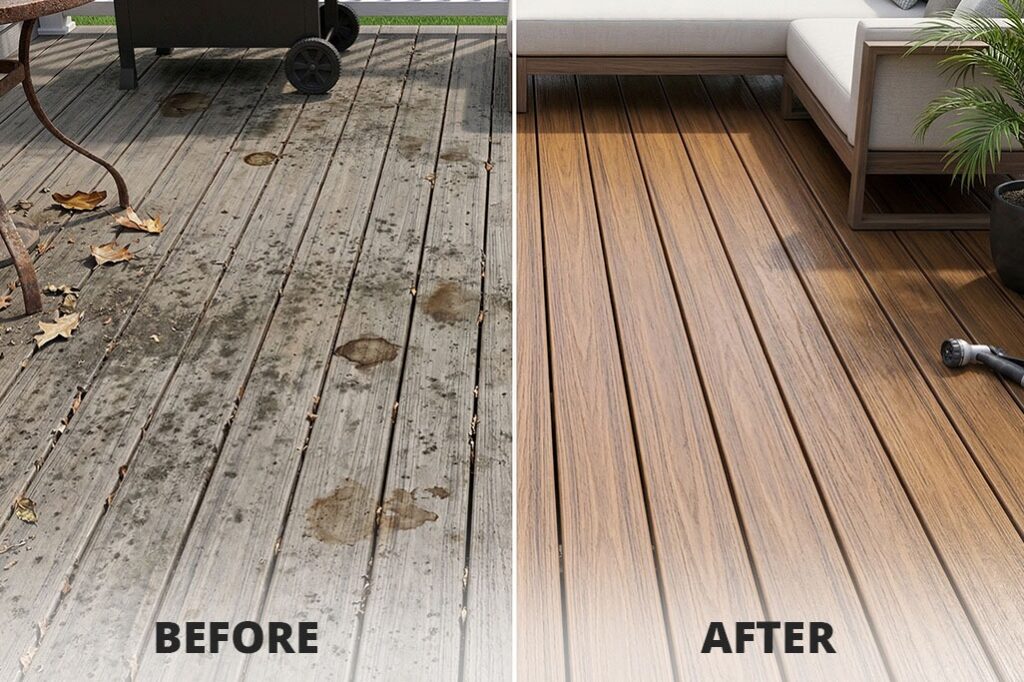
Mould is the most common cleaning challenge for Australian decks, especially in humid climates like Brisbane, Sydney, and the tropics. While composite decking resists mould far better than timber, organic material that settles on the surface (leaves, pollen, dirt) can develop mould growth if left in shady, damp areas.
Treatment: Mix a solution of 2 parts warm water to 1 part white household detergant, or use a dedicated composite deck mould remover. Apply to affected areas and let sit for 10–15 minutes. Scrub with a soft brush in the grain direction and rinse thoroughly. For persistent mould, a commercial oxygen bleach product (sodium percarbonate) is safe for composite and more effective than other alternatives like vinegar.
Prevention: Sweep leaves and debris regularly, trim overhanging vegetation to improve airflow and sunlight, and ensure adequate drainage under and around the deck.
Grease and Oil (BBQ Stains)
BBQ grease is one of the most common deck stains in Australia. The key is to act quickly — fresh grease is much easier to remove than set-in stains. On capped composite surfaces, grease typically remains on the outer layer, which is why prompt cleaning is usually effective without leaving permanent marks.
Fresh grease: Blot (don’t rub) excess grease immediately with paper towels. Apply dish soap directly to the stain, scrub gently with warm water and a soft brush, and rinse. Repeat if needed.
Set-in grease: Apply a degreasing dish soap or a dedicated composite deck degreaser directly to the stain. Let it sit for 15–20 minutes to break down the oil. Scrub firmly (but with a soft brush) in the grain direction. You may need to repeat 2–3 times for old stains. Hot water works better than cold for grease.
Food and Drink Spills
Wine, coffee, juice: Wipe up immediately if possible. For dried spills, warm soapy water and a scrub is usually sufficient. Red wine on lighter-coloured boards may need a composite deck cleaner or diluted oxygen bleach.
Tomato-based sauces: These can stain lighter boards if left. Clean promptly with warm soapy water. For set stains, try a paste of baking soda and water applied for 10 minutes before scrubbing.
Rust Stains
Rust marks from metal furniture legs, screws, or garden tools are orange-brown and can be stubborn. Never use standard rust removers containing hydrochloric or phosphoric acid on composite decking — they can permanently damage the surface.
Treatment: Use an oxalic acid-based cleaner (sold as ‘deck brightener’ or ‘wood brightener’ at hardware stores). Apply to the stain, let sit for 10–15 minutes, scrub gently, and rinse thoroughly. Repeat if needed.
Prevention: Use furniture feet or protective pads under metal furniture legs. Check that any screws or fixings exposed to the surface are stainless steel, not galvanised or plain steel.
Tannin Stains (Leaf Marks)
Wet leaves left on the deck surface can leach tannins, leaving dark marks — especially from eucalyptus and other Australian natives. These are particularly visible on lighter-coloured boards.
Treatment: Warm soapy water and firm scrubbing removes most tannin stains. For stubborn marks, oxygen bleach solution or a dedicated composite cleaner works well. The stains look permanent but almost always come out with the right product.
Prevention: Sweep leaves off promptly, especially in autumn. This is the single most effective maintenance habit for any deck under trees.
Sunscreen and Insect Repellent
A common problem in Australian summer — drips of sunscreen or tropical-strength insect repellent on deck boards. These products contain oils and chemicals that can mark the surface.
Treatment: Dish soap and warm water applied promptly is usually effective. For dried marks, a degreasing cleaner works well. Don’t use solvents like acetone or mineral turps.
Paint and Stain Drips
Wet paint: Wipe immediately with a damp cloth. Most wet paint comes off composite easily if caught quickly.
Dried paint: Gently scrape with a plastic putty knife (never metal). Apply a small amount of rubbing alcohol to soften the residue, then wipe clean. Test in an inconspicuous area first.
Stain Removal Quick Reference
| Stain Type | Cleaning Solution | Key Tips |
| Mould/mildew | White vinegar solution or oxygen bleach | Let sit 10–15 mins before scrubbing |
| BBQ grease | Degreasing dish soap, hot water | Blot fresh spills, don’t rub |
| Food/drink | Warm soapy water | Clean promptly for best results |
| Rust | Oxalic acid deck brightener | Never use HCl or phosphoric acid |
| Leaf tannin | Soapy water or oxygen bleach | Sweep leaves regularly to prevent |
| Sunscreen/repellent | Dish soap, warm water | Don’t use solvents |
| Paint drips | Rubbing alcohol (dried), damp cloth (wet) | Plastic scraper only, test first |
Pressure Washing Composite Decking
Pressure washing is safe for composite decking when done correctly, but improper use can damage the surface. Follow these guidelines for a safe and effective pressure wash.
Pressure Washer Settings
| Setting | Recommended | Why It Matters |
| Maximum PSI | 1,500 PSI (10 MPa) | Higher pressure can damage the cap layer |
| Nozzle type | Fan tip (25° or 40°) | Never use pinpoint/zero-degree tip |
| Distance from surface | Minimum 200mm (8 inches) | Closer distance concentrates pressure |
| Spray direction | Along the grain, never across | Cross-grain spraying can score the surface |
| Speed | Steady, even sweeping motion | Hovering in one spot causes damage |
Start with the lowest effective pressure and increase gradually if needed. Most routine cleaning doesn’t require a pressure washer at all — save it for annual deep cleans or particularly dirty decks. Always test on an inconspicuous section first.
Choosing a Composite Deck Cleaner
For most routine cleaning, mild dish soap and water is all you need. But for deeper cleans, mould removal, or specific stains, a dedicated product is more effective.
What to Look For
Composite-safe labelling: The product should explicitly state it’s safe for composite or WPC (wood-plastic composite) decking. Not all outdoor cleaners are suitable.
Non-bleach formula (or oxygen bleach only): Chlorine bleach can discolour composite boards and damage the surface. Oxygen bleach (sodium percarbonate) is safe and effective for mould and general brightening.
Biodegradable: Important if the runoff will reach garden beds, lawns, or waterways.
What to Avoid
Chlorine bleach (sodium hypochlorite): Can permanently discolour and damage composite surfaces.
Harsh solvents: Acetone, paint thinner, mineral turpentine, and similar solvents can attack the polymer cap layer.
Abrasive cleaners: Scouring powders and steel wool will scratch the surface.
Acid-based cleaners: Hydrochloric, phosphoric, and muriatic acid can etch and permanently damage composite boards.
Recommended Product Types
| Product Type | Best For | How to Use |
| Dish soap (mild) | Routine cleaning, light stains | Few squirts in warm water bucket |
| Composite deck cleaner | General deep clean, annual wash | Dilute per label, apply and scrub |
| Oxygen bleach powder | Mould, mildew, brightening | Dissolve in warm water, soak 10–15 mins |
| Degreaser (composite-safe) | BBQ grease, oil stains | Apply neat to stain, let sit, scrub |
| Oxalic acid brightener | Rust stains, tannin marks | Apply to stain, 10–15 mins, rinse |
Seasonal Cleaning Schedule
Rather than letting dirt build up, a simple seasonal schedule keeps your composite deck in top condition year-round with minimal effort.
Weekly (2 Minutes)
Sweep away leaves and debris, especially if your deck is under trees. This single habit prevents most staining and mould issues. After entertaining or BBQs, wipe up any food or grease spills promptly.
Monthly (20–30 Minutes)
Give the deck a basic wash with soapy water and a soft-bristle brush. This prevents dirt from building up to a level that requires heavier cleaning later. Focus on high-traffic areas and spots near the BBQ or dining area.
Quarterly (30–45 Minutes)
A more thorough clean — move all furniture, clean the entire surface, clear debris from board gaps, and inspect for any stains that need spot treatment. Check that drainage is clear under the deck.
Annually (1–2 Hours)
The big clean. Consider a composite deck cleaner or oxygen bleach solution for a full-surface refresh. This is when a pressure washer is useful for large decks. Inspect fasteners, check the subframe is sound, and address any areas where mould tends to recur. This is also a good time to rearrange furniture so the deck weathers evenly.
Common Cleaning Mistakes to Avoid
Using chlorine bleach: The most common mistake. Chlorine bleach can permanently lighten or discolour composite boards and may void your warranty.
Scrubbing across the grain: Always scrub in the direction of the board texture to avoid leaving visible marks.
Letting cleaning solution dry on the surface: Work in sections and rinse each section before the solution dries, especially on hot days.
Using metal scrapers or wire brushes: Metal tools will scratch the protective cap layer of your composite boards. Use plastic scrapers and soft-bristle brushes only.
Pressure washing too close or too hard: Keep the nozzle at least 200mm away, use a fan tip, and stay under 1,500 PSI.
Ignoring leaf buildup: Leaves left on the deck are the primary cause of mould and tannin stains. Regular sweeping is the most impactful maintenance habit.