Colour is one of the most personal decisions in any deck project. The shade you choose sets the tone for your entire outdoor space — and unlike timber, which weathers and greys over time, quality capped composite decking is designed to maintain its colour for many years. That makes getting the colour right from the start even more important.
This guide walks you through the composite decking colours available in Australia, how different shades perform in our climate, what works best with different home styles, and practical tips for making a decision you’ll be happy with for 25 years or more.
What Is Composite Decking? — Complete Guide →
Popular Composite Decking Colours Options in Australia
Australian homeowners tend to gravitate towards natural timber-inspired tones that complement our outdoor lifestyle and architectural styles. Here are the most popular colour categories:
Charcoal and Dark Grey
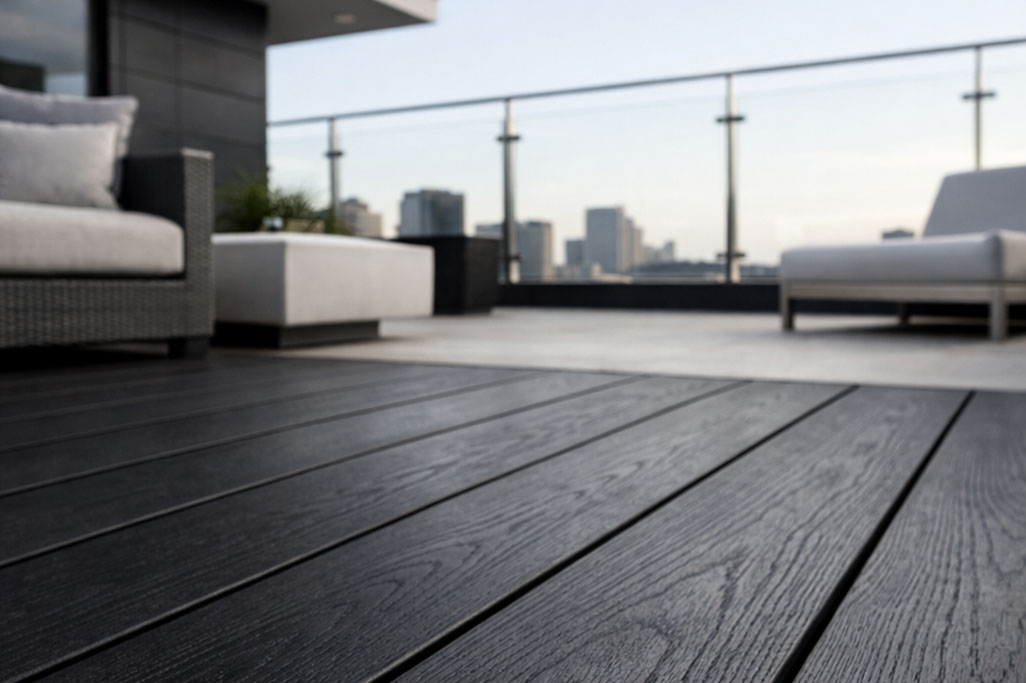
Charcoal is consistently the most popular composite decking colour in Australia. Its deep, contemporary tone suits modern architectural styles, creates a striking contrast with lighter-coloured homes, and provides a sophisticated backdrop for outdoor furniture and landscaping. Charcoal tones work particularly well with rendered walls, steel features, and minimalist design.
Performance note: Darker colours absorb more heat and will feel warmer underfoot in direct sun. This is worth considering for pool surrounds or full-sun decks, especially in hotter climates like Brisbane, Perth, and northern NSW. We’ll cover this in detail in the heat section below.
 Mid-Grey and Silver
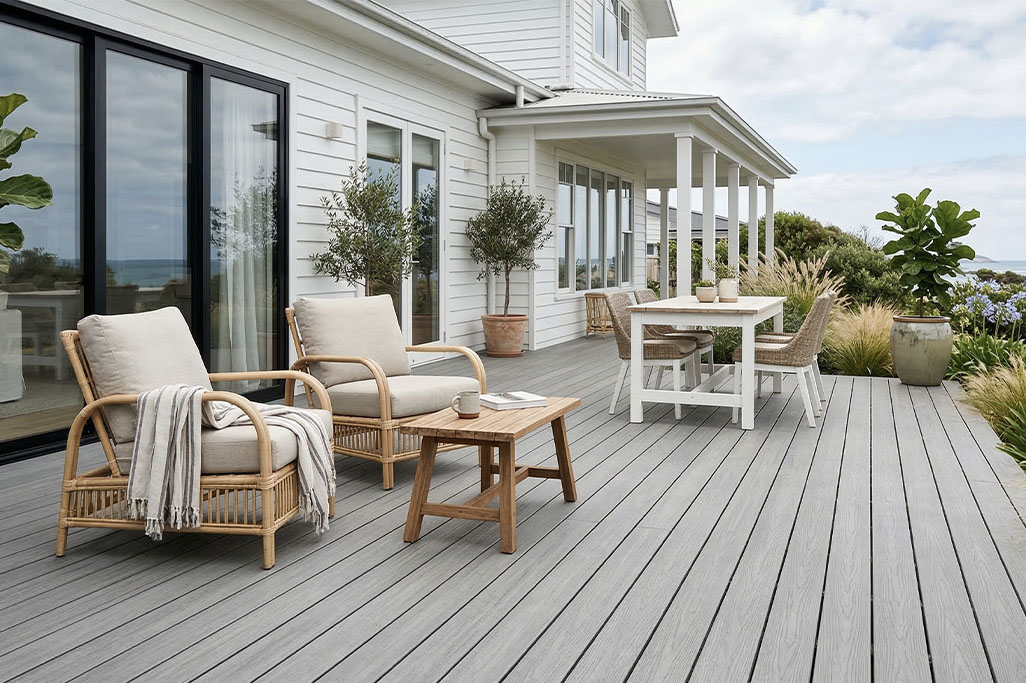 Mid-Grey and Silver
Mid-grey tones offer a more neutral, relaxed aesthetic that suits a wide range of home styles. These shades evoke the natural weathered look of aged timber without the actual weathering and degradation. They’re an excellent choice for coastal homes, Hamptons-style properties, and anywhere a softer, less dramatic look is desired.
Mid-grey is often the best compromise between style and heat performance — lighter than charcoal but more contemporary than traditional timber tones.
Spotted Gum and Teak
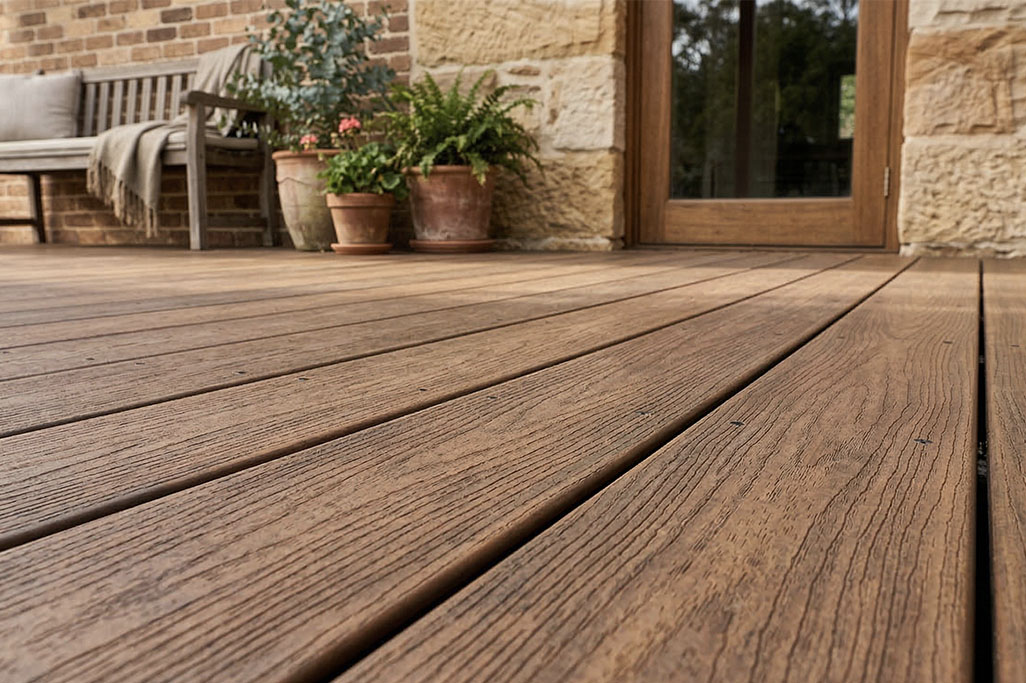 Spotted Gum and Teak
Warm, honey-brown tones inspired by Australian hardwoods are ideal for homeowners who love the look of natural timber but want the low-maintenance benefits of composite. Premium composite boards with realistic grain patterns can be remarkably convincing in these tones, with natural colour variation that mimics real timber.
These colours work beautifully with brick homes, sandstone features, and traditional Australian architectural styles. They create a warm, inviting outdoor space that feels connected to the natural landscape.
Composite vs Spotted Gum Decking →
Merbau and Walnut
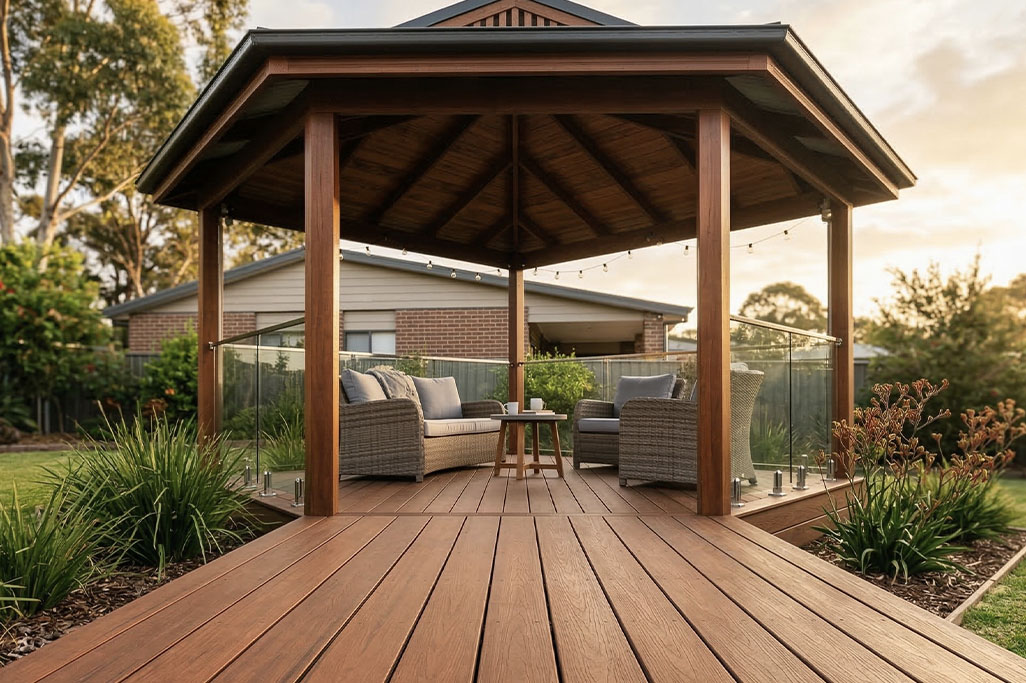 Merbau and Walnut
Rich, reddish-brown tones offer a classic deck aesthetic that has been popular in Australia for decades. These colours reference the traditional look of merbau and jarrah hardwoods — species that have long been the benchmark for Australian decking. They suit both traditional and transitional home styles and create a warm, established feel.
Black and Ebony
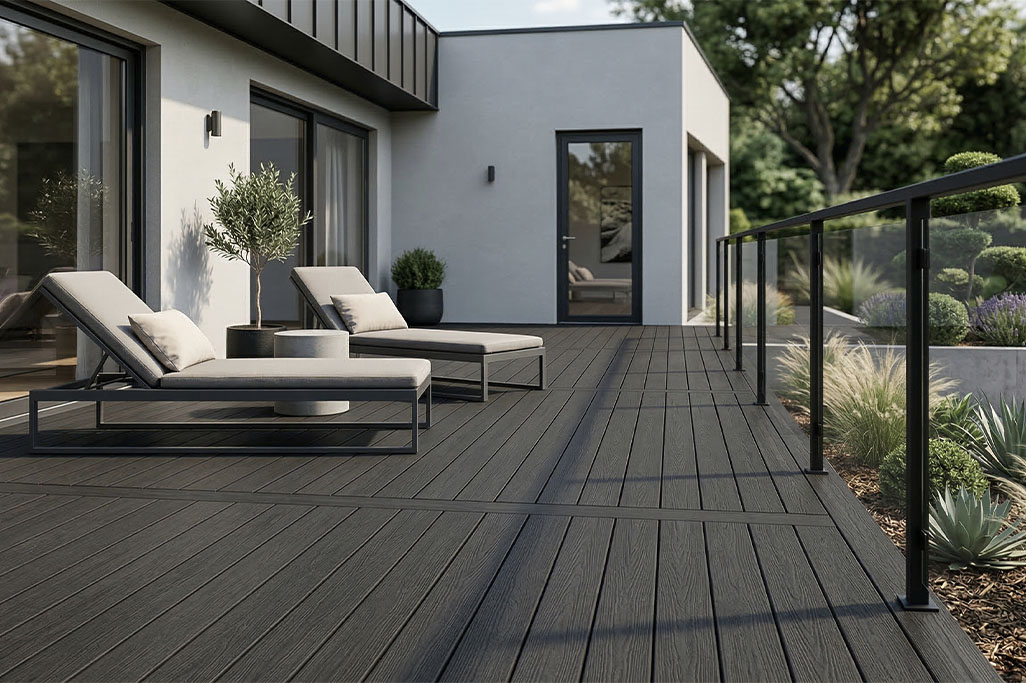 Black and Ebony
True black and deep ebony tones are a bold design choice that creates maximum impact. They’re increasingly popular for contemporary homes, rooftop terraces, and commercial spaces. Black decking makes a strong design statement, but does come with practical considerations around heat absorption and showing dust and pollen more readily.
Light and Blonde Tones
 Light and Blonde Tones
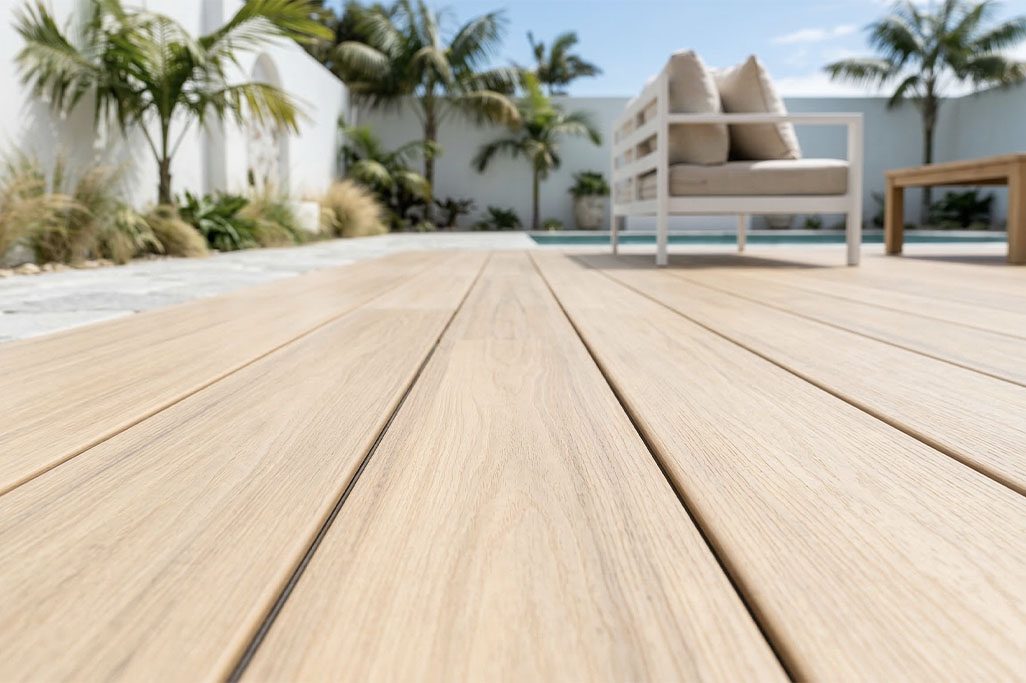
Lighter colours like blonde, sand, and natural pine tones are less common in Australia but offer distinct advantages. They stay significantly cooler underfoot in direct sun, show less dust and pollen, and create an open, airy feel in smaller spaces. They work well in tropical and coastal settings.
How Colour Affects Heat
This is one of the most important practical considerations when choosing a composite decking colour in Australia — and one that catches many homeowners off guard.
All outdoor surfaces absorb heat in direct sunlight. The darker the colour, the more heat is absorbed. On a 35°C day in full sun, the surface temperature difference between a light and dark composite board can be 15–20°C or more. This is the same principle that makes a black car hotter than a white one.
Surface Temperature Guide*
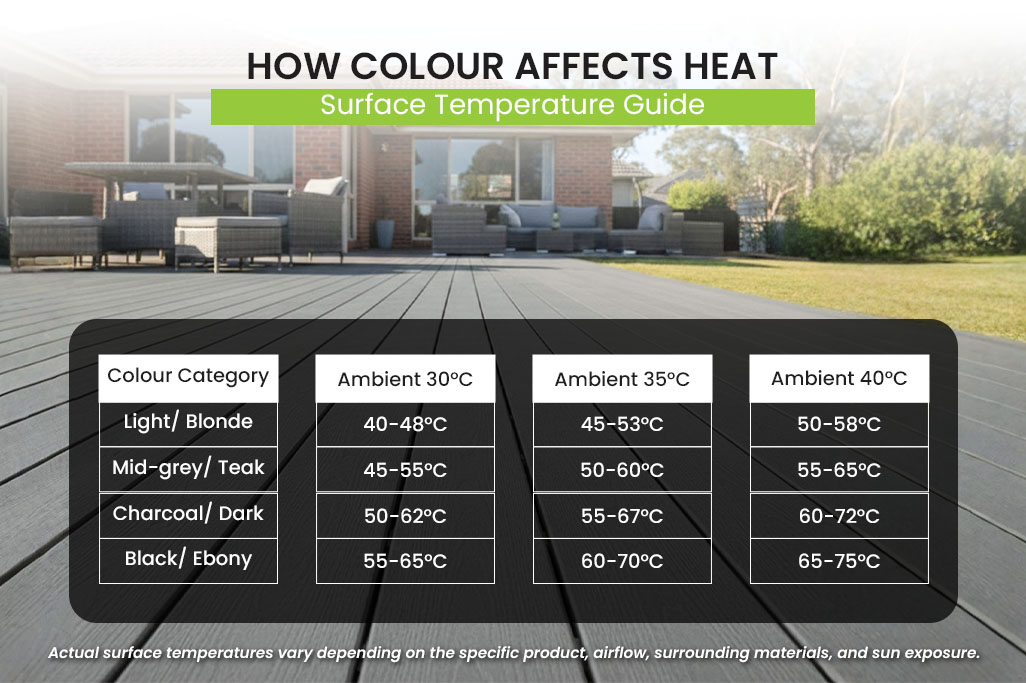
Actual surface temperatures vary depending on the specific product, airflow, surrounding materials, and sun exposure.
These are indicative surface temperatures in full, direct sun. Actual temperatures vary with wind, humidity, cloud cover, and the specific product. Shaded areas will be significantly cooler regardless of colour.
Practical Recommendations for Heat
For pool surrounds, choose light to mid-range colours. Barefoot comfort matters most in these areas. For full-sun, north-facing decks in hot climates (Brisbane, Perth, northern NSW), mid-tones offer the best balance of aesthetics and comfort. For shaded, covered, or south-facing decks, colour choice has less impact on heat — choose based on aesthetics. For all situations, a simple hose-down with cool water will reduce surface temperature quickly on hot days.
Colour and Fading: What to Expect
Composite decking may experience some degree of colour settling during the first few months after installation as the boards are exposed to sunlight and weather conditions. This is a normal process as the material adjusts to UV exposure. After this initial settling period (typically around 8–12 weeks), quality capped composite boards are designed to maintain a stable colour appearance with only gradual change over time, consistent with the product’s fade and stain warranty.
Fading Resistance by Product Tier
| Product Tier | Cap Type | Fade Warranty | Expected Colour Change |
| Budget (uncapped) | None | Limited or none | Significant fading |
| Mid-range (capped) | Polymer cap | 15–20 years | Minor, gradual |
| Premium (ASA capped) | ASA dual-layer | 25–30 years | Minimal |
Any colour change is often more noticeable on darker shades than on lighter tones. If colour retention is your top priority, premium ASA-capped boards offer the best long-term performance regardless of colour choice.
Capped vs Uncapped Composite Decking →
Matching Your Home Style
The right deck colour creates a seamless connection between your indoor and outdoor spaces. Here are some guidelines based on common Australian home styles:
Contemporary/Modern
 Contemporary/Modern
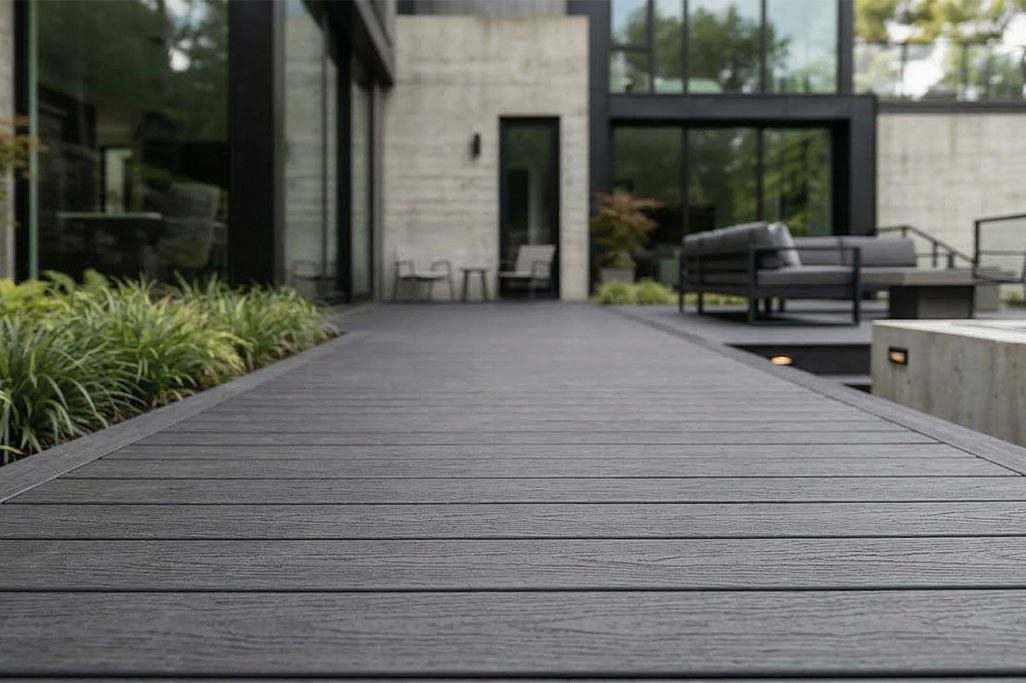
Clean lines call for clean colour choices. Charcoal, dark grey, and black composite decking complement modern homes with their bold, minimalist aesthetic. These work especially well with concrete, steel, and glass architectural elements. If you’re concerned about heat, a dark grey rather than true black gives a similar look with slightly better heat performance.
Coastal/Hamptons
 Coastal/Hamptons
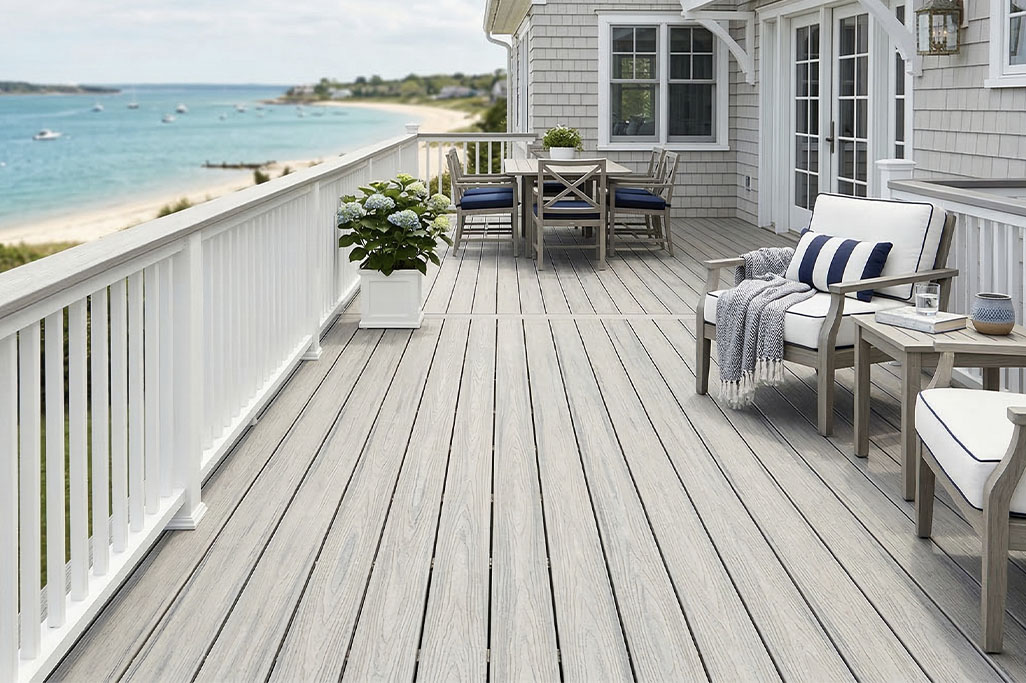
Light grey, silver, and weathered-timber tones suit coastal architecture perfectly. These colours evoke the natural salt-worn aesthetic of beachside living without the actual deterioration. Paired with white trims and blue accents, lighter composite tones create the classic coastal look.
Traditional/Federation
 Traditional/Federation
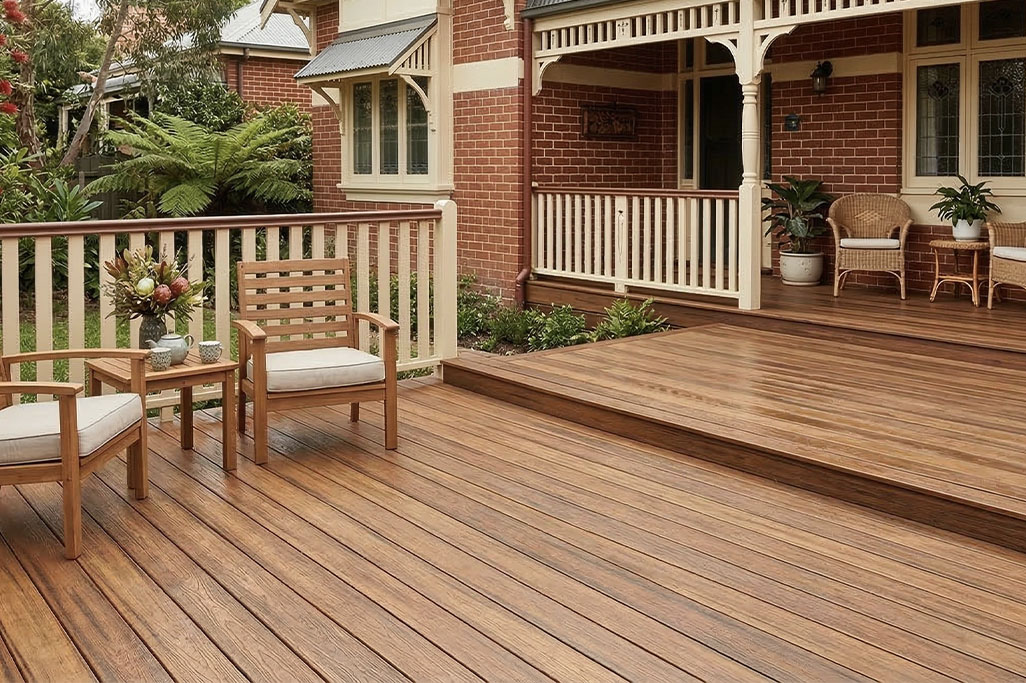
Warm timber tones like spotted gum, merbau, and walnut suit traditional Australian homes. These colours reference the hardwood decking that has been a fixture of Australian outdoor living for generations, while delivering modern performance and durability.
Bushland/Natural
 Bushland/Natural
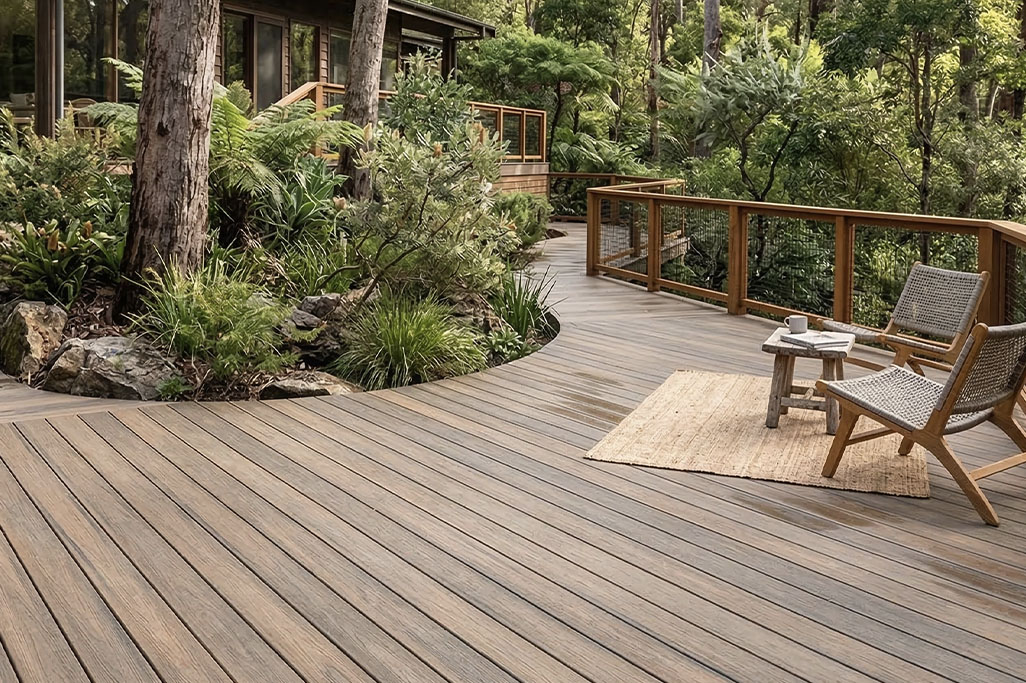
For homes surrounded by natural landscape, mid-brown and warm grey tones integrate best with the environment. These colours don’t compete with the natural surroundings and create a deck that feels like it belongs in the landscape rather than standing out from it.
How to Choose: Practical Tips
1. Start with Samples
Online photos and screen colours are unreliable. Composite decking looks different in person, and significantly different again in outdoor light compared to indoor fluorescent light. Always order physical samples and view them outside, in the actual location where your deck will be installed. Look at samples at different times of day — morning light, midday sun, and evening shade all change the appearance.
2. Consider Your Surroundings
Look at the colours already present around your outdoor space — your home’s exterior, roofing, fencing, landscaping, and any hard surfaces like paving or retaining walls. The best deck colour works with these existing elements rather than clashing. Placing samples against your house wall is a simple way to test compatibility.
3. Think About Furniture
If you have existing outdoor furniture, consider how it will look against your chosen deck colour. Darker decks provide a striking contrast with lighter furniture, while lighter decks create a more unified, relaxed feel with most furniture colours.
4. Plan for Board Direction and Light
The direction your boards are laid affects how the colour appears. Boards running towards you look different from boards running away — the grain pattern catches light differently. Consider which direction you’ll most often be viewing the deck from (usually from inside the house looking out) and lay boards accordingly.
5. Don’t Forget the Fascia
The fascia boards (edges) of your deck are often a different colour or complementary shade. Many homeowners choose a darker fascia to frame a lighter deck, or match the fascia to their home’s trim colour. Consider the full picture, not just the deck surface.
Colour Options in Our Range
Our composite decking is available across multiple ranges, each offering a curated selection of colours designed for Australian homes and conditions:
NextGen Titanium Range: Our premium range featuring advanced ASA capping with the most realistic timber-grain textures and multi-tonal colour blending. Available in a wide palette of contemporary and timber-inspired tones.
HD Pro Range: Our mid-range workhorse available in popular Australian tones including Aussie Oak, Aussie Redwood, Spotted Gum and Merbau, offering excellent colour retention and durability.
HD Urban X Range: Contemporary urban-inspired colours with clean lines and modern aesthetics.