Understanding Composite Decking
What Composite Decking Is Made Of
Composite decking is a mix of wood fibres and recycled plastics. The idea behind this combination is to create boards that are more resistant to weather conditions than traditional timber. The wood content provides strength, while the plastic helps resist water and reduces swelling and warping. This balance makes it a popular choice for homeowners who want a low-maintenance surface that looks good over time.
How It Differs From Traditional Wood
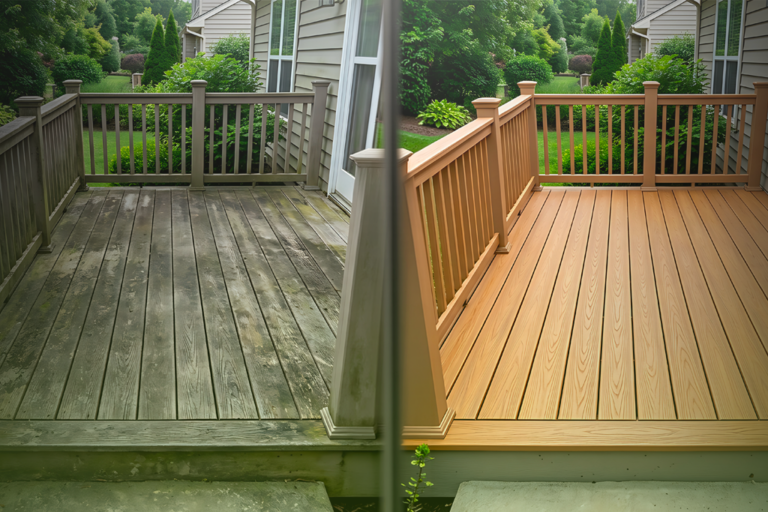
Traditional timber is prone to rot, splitting, and fading when exposed to harsh outdoor conditions. Composite materials, on the other hand, are engineered to limit those problems. They don’t need staining or sealing to keep their colour. They also hold up better against insects and fungus, which often shorten the lifespan of natural timber. Where timber may start showing cracks after just a few seasons, composite decking tends to keep its shape longer.
Why Homeowners Choose Composite Materials
One of the main reasons people choose this type of decking is that it requires less work to maintain. Instead of sanding, sealing, or painting, all it needs is an occasional wash. It also comes in a variety of finishes and colours, giving people the chance to pick something that suits their outdoor space. The higher upfront cost can be balanced by fewer repairs and less time spent on upkeep.
Weather Exposure and Composite Decking
Sun, Rain, and Everyday Conditions
Outdoor surfaces face daily wear from weather. Sun can fade colours, while rain can lead to swelling in timber decks. Composite decking boards are designed to limit these problems. The plastic component helps resist moisture, and UV protection is often built in to reduce fading from direct sunlight.
How Seasonal Shifts Affect Deck Boards
In Australia, seasons bring large shifts in temperature. Timber tends to expand and contract with these shifts, leading to warping and splitting. Composite decking is more stable, although it can still expand slightly. Correct installation, with spacing between boards and using breaker boards, helps manage these changes and reduces long-term damage.
Why Composite Decking Handles Moisture Better Than Wood
Timber absorbs water easily, which can make it slippery and prone to rot. Composite decking is denser, less porous, and covered with protective capping in many modern boards. This reduces water absorption and helps the boards dry quicker after rain. That alone makes it more durable in wet conditions than natural timber.
Hailstorms and Outdoor Surfaces
The Nature of Hail and How It Forms
Hail forms in storm clouds when strong updrafts push raindrops into extremely cold areas of the atmosphere. The drops freeze, then get coated with more layers of ice until they become heavy enough to fall. Hailstones can range from small pellets to balls the size of golf balls or even larger. Their size determines how much damage they cause when they strike the ground.
Common Damage to Roofs, Cars, and Timber
Roof tiles, windscreens, and car panels often take the worst beating in a hailstorm. Timber decks can show dents, cracks, and splinters after heavy hail, particularly if the hailstones are large. Paint finishes also chip away, exposing the raw surface beneath. These examples highlight how vulnerable outdoor materials are when exposed to hard-hitting hail.
Why Decking Faces Unique Challenges in a Hailstorm
Decking is horizontal and fully exposed, unlike walls or angled roofs that can deflect some of the force. This means it takes the hailstones directly. Over time, repeated storms can mark the surface, whether it’s timber or composite. The difference lies in how each material reacts to the force of impact.
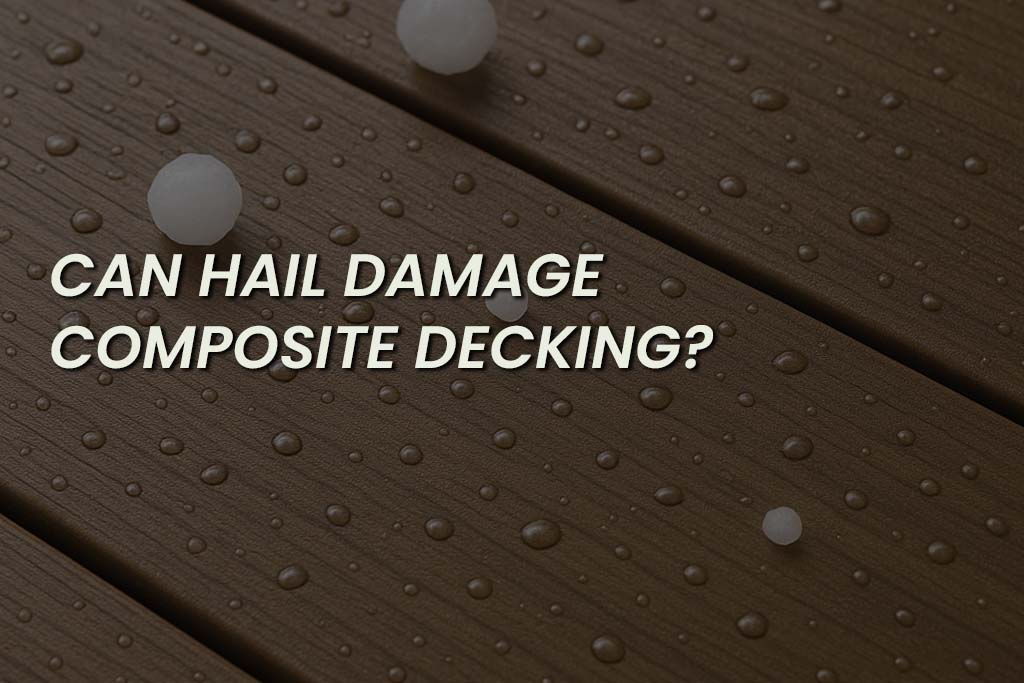
Can Hail Damage Composite Decking?
Impact Resistance of Composite Decking Boards
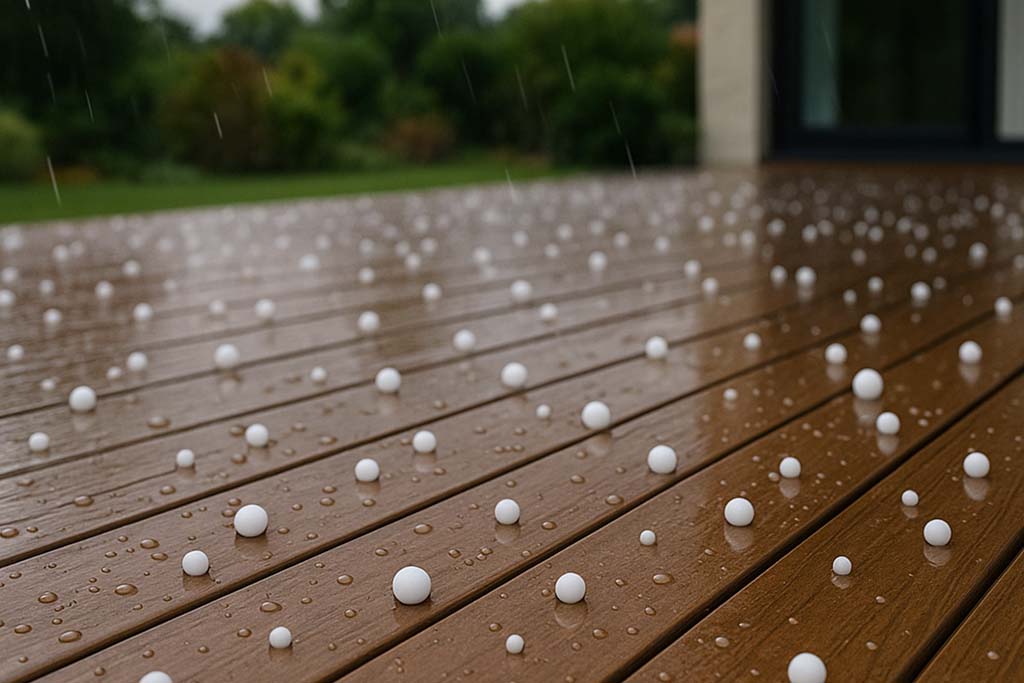
Composite decking boards are denser and tougher than timber, which gives them an advantage. The mixture of wood fibres and plastic distributes the impact across the board. Small hail usually leaves no lasting damage. Larger hailstones may leave dents, but the damage tends to be cosmetic rather than structural.
How Board Density and Thickness Affect Durability
Not all boards are the same. Thicker and denser boards tend to absorb impact better. Boards with hollow cores may be slightly weaker than solid boards, though even hollow boards are often stronger than timber in resisting hail damage. Choosing the right type of composite decking boards is important for homeowners in hail-prone areas.
Comparing Composite Wood Decking Boards to Timber in Storms
When hail strikes timber, the surface can crack and splinter, opening pathways for water to seep in. Composite wood decking boards, on the other hand, resist splintering. Even when dented, they usually retain their structural integrity. This means fewer costly repairs after storms compared to traditional timber decks.
The Role of Quality and Manufacturing
Composite Lumber Decking vs Cheaper Alternatives
Composite lumber decking is made under strict conditions to ensure strength and durability. Cheaper boards that cut corners on materials or manufacturing often don’t perform as well. They may be more likely to dent under heavy hail, which shows why quality matters when choosing boards.
Testing and Standards in the Industry
Many manufacturers test their decking for impact resistance, simulating hail or heavy objects striking the surface. These tests help set standards that homeowners can rely on. Boards that pass impact resistance tests give more confidence in areas where storms are frequent.
Why Not All Boards Handle Hail the Same Way
The mix of wood and plastic, the presence of capping, and the overall density make a big difference. Some boards include stronger protective layers that handle hail better. This explains why some decks look untouched after a storm, while others show visible marks.
Factors That Influence Hail Damage
Size of the Hailstones
Small hailstones rarely cause more than cosmetic scuff marks. Larger stones, especially those bigger than 2cm in diameter, carry much more force. The bigger the hail, the higher the chance of visible dents on the deck surface.
Wind Speed and Direction
A hailstorm with high winds drives hailstones harder against surfaces. Direct hits on a flat surface can cause deeper dents. Storms with gusts that change direction can expose all areas of the deck.
Age and Condition of the Decking
Newer boards are tougher and more resistant. As decking ages, surface wear can make it more vulnerable to marks. Regular cleaning and care help maintain the board’s outer layer, keeping it strong against impacts.
Composite Decking in Australian Cities
Composite Decking Sydney and Storm History
Sydney is known for its unpredictable storms. Large hail events have caused widespread damage in the past, making it a real concern for outdoor surfaces. Composite decking Sydney residents install tends to fare better than timber when storms hit, giving it an advantage in the long run.
Composite Decking Brisbane and Summer Storms
Brisbane faces intense summer storms with hail, lightning, and strong winds. Timber decks often need repair after these storms, while composite decking Brisbane homeowners choose offers more resilience. The reduced need for repairs is one reason it has become so popular in the region.
Composite Decking Gold Coast and Coastal Weather
The Gold Coast is exposed to both coastal moisture and summer storms. Composite decking Gold Coast homeowners often combine weather resistance with low maintenance. This combination helps manage both the salty air and the hail that sometimes arrives with tropical storms.
Composite Decking Melbourne and Hail Events
Melbourne has seen its fair share of damaging hail, including rare events where cars and windows were smashed. Composite decking Melbourne properties use tends to handle the weather better than untreated timber. Even after large hail, many composite decks remain structurally sound.
Costs and Long-Term Value
Composite Decking Prices vs Repairs After Storms
The upfront cost of composite decking may be higher, but the reduced repair costs after hailstorms balance the expense. Composite decking prices reflect the long-term value of boards that need fewer replacements and less upkeep.
Why Composite Decking Boards Price Reflects Strength
When people see a higher composite decking board price compared to timber, they sometimes hesitate. But the price is linked to the technology and durability built into the boards. In areas where hail damage is common, the investment can save money down the line.
Balancing Cost With Durability in Harsh Weather
In regions with frequent hailstorms, paying more for stronger decking makes sense. The reduced maintenance and replacement costs outweigh the initial expense. Choosing quality boards can mean the difference between simple cosmetic dents and costly deck replacement.
Preventative Measures Against Hail Damage
Strategic Placement of Decks Near Shelter
If possible, decks should be placed near trees, walls, or overhangs that provide some shelter. While full protection isn’t always possible, even partial cover can reduce hail impact.
Protective Covers and Temporary Shields
For those who live in hail-prone regions, using outdoor covers or temporary shields during storm season can help. These barriers absorb the impact before it reaches the decking.
Routine Maintenance After Heavy Storms
After a hailstorm, checking the deck for damage is important. Small dents may not need repair, but spotting cracks or chips early helps prevent long-term damage. Simple cleaning also helps keep the boards in good condition.
What To Do If Hail Hits Your Deck
Inspecting Boards for Cracks or Dents
Walk across the deck slowly, checking for dents, scratches, or cracks. Most composite decking shows only surface-level marks, but if cracks appear, they need closer inspection.
When Surface Marks Are Cosmetic vs Structural
Surface dents are often just visual and don’t affect the board’s strength. Structural damage is rare in composite decking but can happen with very large hailstones. In those cases, replacing the damaged boards may be necessary.
When To Replace Damaged Composite Decking Boards
If damage affects the integrity of the board, replacement is the safest choice. Replacing a few boards is less costly than letting water seep in and damage the frame below.
Comparing Composite Decking Across Australia
Composite Decking Australia: Climate Considerations
The different climates across Australia play a role in how decking performs. In areas with heavy storms, hail resistance is a top concern. Composite decking Australia tends to withstand these weather patterns better than timber.
Local Weather Patterns and Decking Choices
Areas with heavy rainfall or hail benefit most from dense, capped boards. Warmer areas with more sun exposure may prioritise UV resistance. Knowing the local weather helps people choose the right board type.
Regional Recommendations Based on Conditions
Sydney and Brisbane residents may choose boards tested for hail impact. Gold Coast and Melbourne homeowners may prioritise resistance to both moisture and hail. Choosing based on region ensures the best performance.
Future of Composite Decking and Weather Resistance
Advances in Composite Materials
Newer boards include stronger outer layers, better capping, and improved density. These advances continue to make composite decking tougher against hail.
Eco-Friendly Trends and Stronger Boards
Many boards now use recycled plastics and eco-friendly processes. The move toward sustainability is producing boards that are not only greener but stronger too.
Long-Term Outlook for Homeowners Facing Hail
Composite decking is proving to be one of the most resilient outdoor materials for hail-prone areas. While no surface is completely hail-proof, it offers a strong balance between durability, cost, and appearance.