Choosing the right decking for Australian outdoor spaces
Choosing the right outdoor decking is about more than colour, style or the initial price of the boards. The material you select will influence how your outdoor space looks, how it performs in Australian conditions and how much ongoing care it needs.
For many Australian homeowners and DIY customers, choosing outdoor decking means finding a material that can suit the way the space will be used while handling the conditions it will face. Timber and composite decking are two of the most common options.
Timber remains popular for its natural grain and traditional character. Composite decking offers a timber-inspired appearance with more consistent finishes and fewer ongoing treatment requirements.
The right outdoor decking option depends on your project, budget, design preferences, site conditions and willingness to maintain the deck over time. This guide looks at the factors that matter most when choosing decking for Australian outdoor spaces, including how composite and timber perform in different environments.
If you want a more detailed material-by-material comparison, read our complete Composite vs Timber Decking guide.
What is timber decking?
Timber decking is made from natural wood. Common options include treated pine and a variety of hardwood species, each with its own colour, grain, cost and performance characteristics.
The main appeal of timber is its natural appearance. Each board has unique grain movement, colour variation and surface details. This gives timber decking a warm, traditional finish that works well with many Australian homes.
Timber can also be sanded, stained, oiled and refinished. Homeowners can restore the surface or change its colour during the life of the deck.
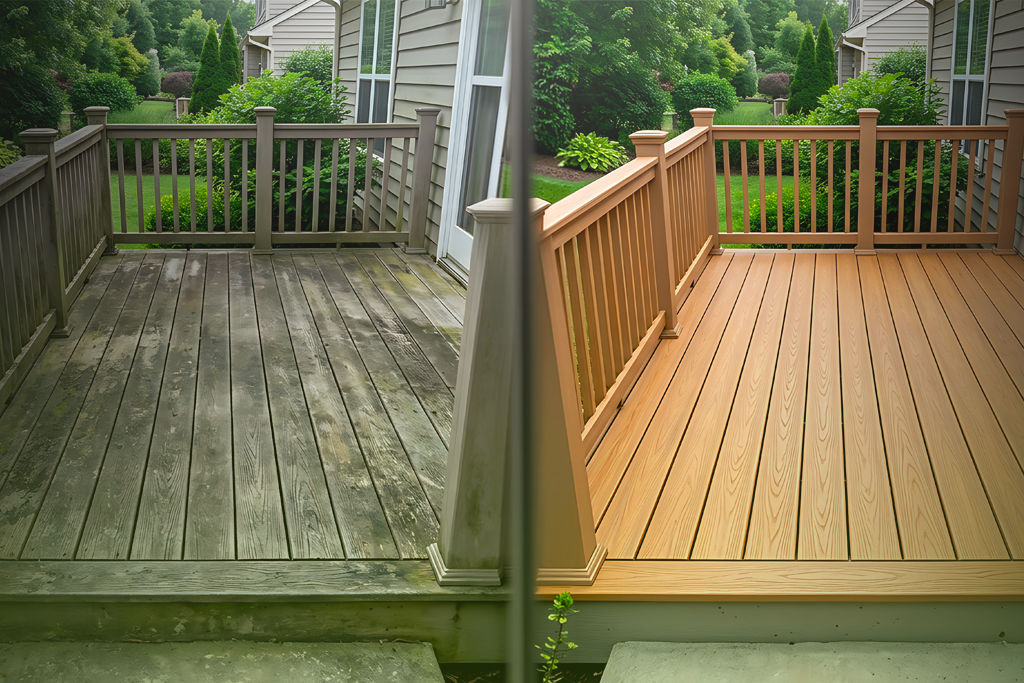
However, natural timber responds to sunlight, moisture, heat and changing weather conditions. Without suitable installation and ongoing care, boards may fade, split, splinter, cup or warp.
The maintenance commitment will depend on the timber species, location, exposure and finish used.
What is composite decking?
Composite decking is an engineered outdoor decking material manufactured from a combination of materials, commonly including polymers and wood fibres depending on the product. Some products also include a protective outer layer designed to support colour retention, surface durability and resistance to moisture.
Modern composite decking is available in timber-look textures and a wide range of colours. It offers homeowners a way to achieve the appearance of a timber deck without the same ongoing oiling, staining or sealing routine.
It is important to describe composite decking accurately. It is low maintenance, not maintenance-free. The boards still need regular cleaning, suitable drainage, adequate ventilation and correct installation.
Brite Decking offers different composite decking options for different project needs and budgets. Homeowners can explore the composite decking board range or use the product comparison page to review the available choices.
What should you consider when choosing outdoor decking?
Appearance and design
Timber decking offers genuine natural variation. Knots, grain patterns and changes in colour give each deck a distinctive appearance.
This natural character will continue to develop outdoors. Untreated timber typically fades or greys as it ages. Regular oiling or staining can help maintain a chosen colour, although some weathering should still be expected.
Composite decking provides a more controlled and consistent finish. The boards are manufactured to create similar dimensions, colours and textures across the project.
This can be helpful when a homeowner wants a clean, uniform result or needs to coordinate the decking with exterior walls, roofing, landscaping or outdoor furniture.
Brite Decking’s range structure includes:
- Urban X as the accessible entry-level option
- HD PRO as the core all-round range balancing performance and value
- NextGen Titanium as the premium, design-led range
Availability, product claims and technical suitability should always be confirmed using current product documentation.
A physical sample is the best way to assess colour and texture. Natural light, shade and surrounding finishes can make a board look different from how it appears on a screen.
Request free composite decking samples and view the options at your property before making a final decision.
Maintenance requirements
Maintenance is an important consideration when choosing decking for an outdoor space, particularly where the deck will be exposed to regular sun, rain, moisture or heavy use.
Timber usually needs regular surface care to maintain its appearance and reduce weather-related deterioration. Depending on the product and location, this may include:
- Cleaning
- Sanding
- Oiling
- Staining
- Sealing
- Replacing damaged boards
Some homeowners enjoy maintaining timber and see it as part of caring for the property. Others prefer an outdoor decking material that requires less ongoing treatment.
Composite decking does not generally need routine oiling, painting or staining. Regular cleaning is still necessary, especially where dirt, leaves, food, moisture or organic matter can collect.
The Brite Decking cleaning and care guide provides practical information on looking after composite decking after installation.
For homeowners who want to spend more time using their deck and less time refinishing it, composite decking may be the more practical option.
Initial cost and long-term value
Decking costs vary considerably depending on the timber species, composite range, project size and installation requirements.
For an outdoor decking project, it is important to compare the complete project cost rather than the board price alone.
Your outdoor decking budget may include:
- Subframe materials
- Decking boards
- Fixings and clips
- Fascia and finishing boards
- Delivery
- Site preparation
- Labour
- Stairs and edges
- Future maintenance
Timber may also involve ongoing costs for oils, stains, cleaning products, sanding equipment and professional maintenance.
Ongoing costs can also vary between decking products. When considering long-term value, factor in maintenance requirements, cleaning, surface treatments and any professional maintenance that may be required over the life of the deck.
The most useful calculation is the total cost of ownership. Consider how long you expect to use the deck, whether you will maintain it yourself and how often professional work may be required.
Use Brite Decking’s composite decking price calculator to estimate material requirements for your project. Final pricing and availability should be confirmed before ordering.
Surface comfort and consistency
Timber can become rough or splintered as it weathers, particularly if the surface is not maintained. This may be a concern in areas where children play or people regularly walk barefoot.
Composite decking does not splinter in the same way as natural timber. This makes it an appealing option for family entertainment areas, balconies and pool surrounds.
Manufactured composite boards also provide more consistent dimensions. Natural timber can vary slightly between boards, which may require additional sorting or preparation during installation.
Both materials can create comfortable outdoor spaces when selected, installed and maintained correctly. For outdoor entertaining areas, balconies and pool surrounds, think about how often the surface will be used, whether people will regularly walk barefoot and how exposed the deck will be to weather.
How do outdoor decking materials perform in Australian conditions?
Outdoor decking in Australia can be exposed to strong sunlight, rain, humidity, coastal air and significant changes in temperature. When choosing decking for an outdoor area, the conditions of the site should be considered alongside appearance, maintenance and budget.
Moisture, drainage and ventilation
Timber naturally absorbs and releases moisture. This movement must be considered during installation. Poor airflow, prolonged dampness and unsuitable drainage can increase the risk of movement or deterioration.
Composite decking also requires adequate ventilation and drainage. Expansion spacing, joist requirements and fixing methods must follow the instructions for the selected board.
The supporting structure is just as important as the visible decking surface. A quality board cannot correct an unsuitable or poorly constructed subframe.
DIY customers should review the Brite Decking installation guide before beginning a project. The guide covers areas such as expansion, board preparation, clips, joints, breaker boards and fascia installation.
Rot, pests and weathering
The long-term performance of timber depends on the species, treatment, installation and maintenance. Suitable timber can perform well for many years, but neglected areas may become vulnerable to moisture or pest-related damage.
Composite decking is designed to reduce many of the concerns associated with natural timber. However, performance varies between products.
Do not assume that every composite board has the same structure, warranty or technical characteristics. Compare the approved information for each range before choosing.
Bushfire and compliance considerations
Properties in bushfire-prone locations may require products that meet specific Bushfire Attack Level requirements.
BAL ratings and fire-related claims are product-specific. Not every timber or composite decking product has the same rating.
Brite Decking provides test certificates and technical reports for applicable products. These should be considered alongside the requirements of the project and guidance from the relevant building professionals.
Brite Decking supplies decking products and general product information. Structural design, installation approval and project compliance remain the responsibility of the customer, builder and appropriately qualified professionals.
Choosing outdoor decking for pool areas
Pool decking must be selected carefully because the surface may be exposed to water, sunscreen, salt, pool chemicals and regular barefoot use.
When comparing composite decking and timber decking for a pool area, consider:
- Surface texture
- Available slip test information
- Drainage
- Ventilation
- Heat exposure
- Board colour
- Cleaning requirements
- Fixing materials
Composite decking is often considered for pool surrounds because it is low maintenance and does not splinter like timber. However, product suitability must still be checked. Slip classifications and moisture-related performance can differ between ranges.
Timber can also be used around pools, but it may require more frequent surface care. A deck that becomes rough, dirty or weathered may be less comfortable underfoot.
No outdoor decking surface should be described as completely slip-proof. Correct installation, cleaning and drainage remain essential regardless of the material.
How does outdoor decking perform in direct sun?
All outdoor surfaces become warmer in direct sunlight.
The surface temperature of a deck will be influenced by:
- Board colour
- Material composition
- Air temperature
- Ventilation
- Shade
- Duration of sun exposure
Surface temperatures vary between decking products, colours and site conditions. Darker colours generally absorb more heat than lighter colours.
For an exposed outdoor area, consider choosing a lighter shade or adding a pergola, umbrella or other source of shade.
Samples can help you make a more informed choice. Place the board in the intended area at different times of the day to assess its colour, texture and temperature before ordering.
Outdoor decking for DIY projects
Both materials can be used in DIY projects, but both require proper planning.
Timber may feel familiar to homeowners who have experience with standard woodworking tools. The installer must still account for natural board variation, finishing and future maintenance.
Composite decking is often installed using concealed fixing systems. The boards have consistent dimensions, but the installer must follow product-specific requirements for:
- Joist spacing
- Expansion gaps
- Ventilation
- Fasteners
- Breaker boards
- Board layout
- Fascia installation
Raised decks, structures connected to a building and projects requiring permits may need professional design or installation.
The DIY composite decking guide brings together product information, samples, installation resources and pricing tools for homeowners planning their own deck.
What about sustainability?
Sustainability is another consideration when selecting materials for an outdoor decking project, but it cannot be assessed simply by describing one material as natural and the other as recycled.
Responsibly sourced timber is renewable. Its environmental impact will depend on the species, forestry practices, treatment process, transport distance and expected lifespan.
Composite decking may contain recycled wood fibres and plastics. Its impact depends on the specific composition, manufacturing process, service life and end-of-life options.
When comparing outdoor decking materials, ask suppliers about:
- Material sourcing
- Recycled content
- Product lifespan
- Maintenance chemicals
- Replacement requirements
- Disposal or recycling options
A suitable product that is installed correctly and used for a long time may be more responsible than a poorly chosen material that needs frequent repair or early replacement.
Which outdoor decking option suits your space?
Composite decking may suit your project when you:
- Prefer a consistent timber-look finish
- Want to reduce ongoing oiling and staining
- Are planning a family or poolside area
- Want a choice between entry-level, all-round and premium ranges
- Are prepared to follow product-specific installation requirements
- Are considering long-term ownership costs
Timber decking may suit your project when you:
- Prefer genuine natural grain and variation
- Like the way timber develops character over time
- Are comfortable with regular surface maintenance
- Want the option to sand or refinish the boards
- Have selected a suitable species for the location
- Understand the maintenance commitment involved
Before making a decision, consider how the deck will be used, the conditions it will face and how much maintenance you are realistically prepared to complete.
Choosing the right decking for your outdoor space
The best outdoor decking material depends on where the deck will be installed, how exposed it is to the elements and how the space will be used day to day.
Timber offers natural grain, traditional character and the ability to refinish the surface. It also needs a greater commitment to ongoing care.
For many Australian outdoor spaces, composite decking offers a practical balance of timber-inspired appearance, consistent finishes and lower ongoing treatment requirements. It can be particularly appealing for outdoor entertaining areas, pool surrounds, balconies and other spaces where homeowners want to reduce regular refinishing.
Before choosing, compare the total project cost, review the installation requirements and view samples at your property.
Explore Brite Decking’s composite decking ranges, use the decking price calculator or request free samples.