Not every home has room for a sprawling outdoor entertaining area — and that’s perfectly fine. Some of the most functional and stylish outdoor spaces in Australia are compact decks that make every square metre count. Whether you’re working with a small backyard, a narrow side passage, an apartment balcony, or an inner-city courtyard, a well-designed small deck can transform dead space into your favourite part of the home.
This guide is packed with practical design ideas, space-maximising strategies, and cost-effective approaches for small deck projects using composite decking.
What Is Composite Decking? — Complete Guide →
What Counts as a ‘Small’ Deck?
For this guide, we’re talking about decks under 15m² — roughly 3m x 5m or smaller. This includes compact backyard decks (6–15m²), balcony overlays (3–10m²), courtyard platforms (4–12m²), side passage decks (2–8m²), and entry or front porch decks (3–8m²). Small decks have unique design considerations. The ideas that work for a large deck don’t always translate to smaller spaces — you need strategies that maximise the feeling of openness while maintaining functionality.
Design Ideas for Small Decks
1. The Outdoor Room
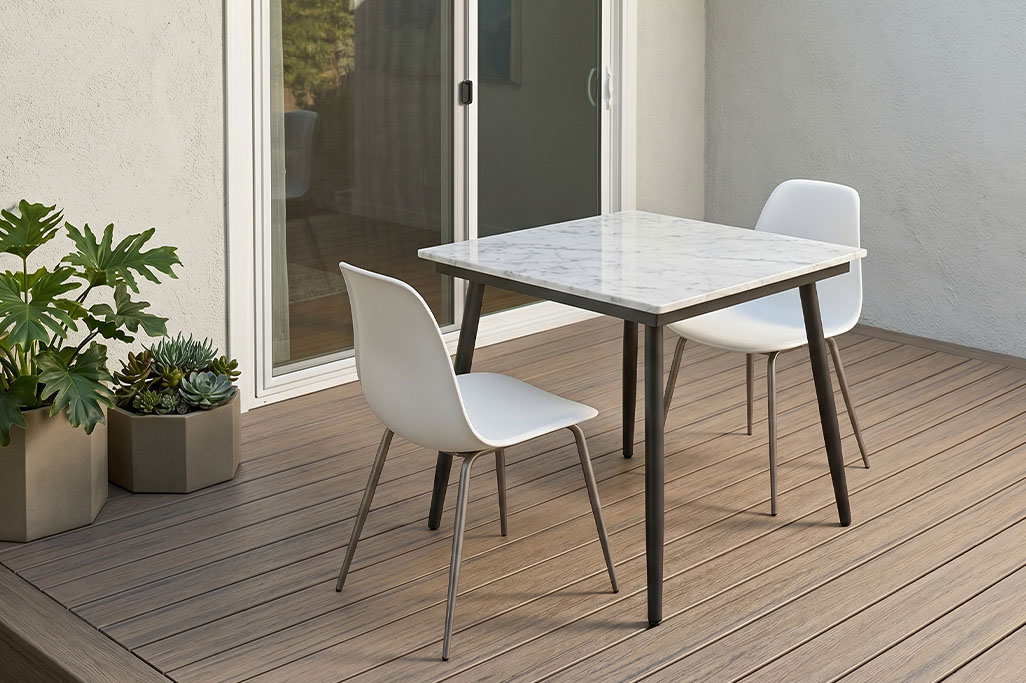
Treat your small deck as an outdoor room rather than a transitional space. Define it with purpose: an outdoor dining room, a reading retreat, a morning coffee spot. Having a clear purpose helps you size the deck correctly and choose the right furniture. For a dining-focused deck, allow 2.5m x 3m minimum for a four-person setting with comfortable movement. For a lounge area, 2m x 3m comfortably fits two outdoor chairs and a small side table.
2. Ground-Level Platform
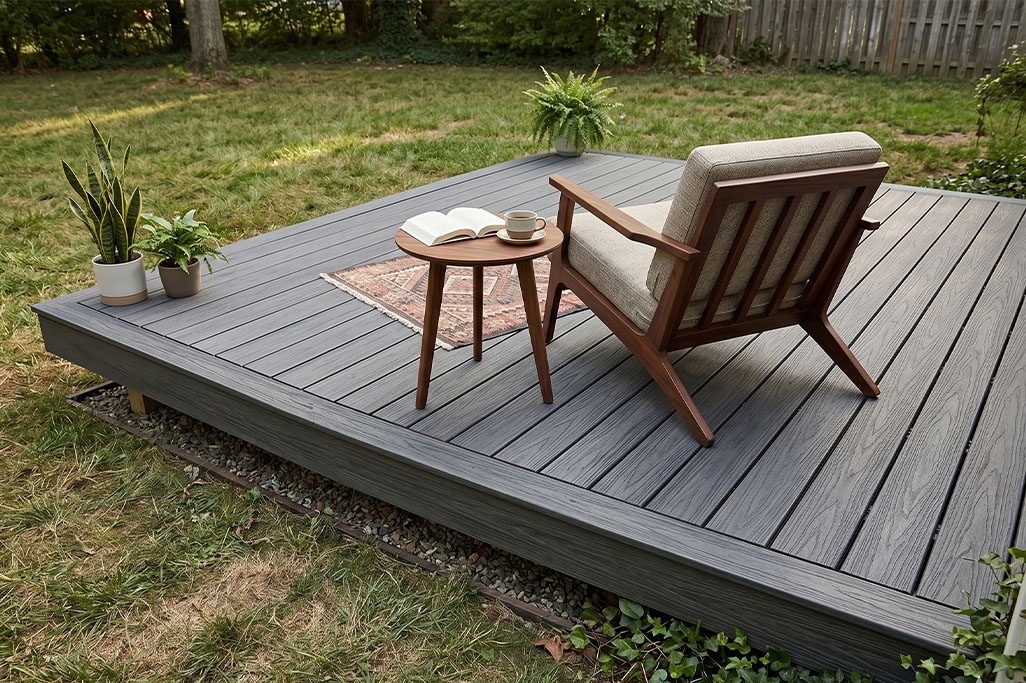
A floating ground-level deck is one of the most cost-effective small deck options. It typically sits on a prepared gravel base without the need for deep footings. In many cases, ground-level freestanding decks may not require council approval, depending on local regulations. Simple designs can often be completed over a weekend, making this a popular option for DIY projects. This approach works well for transforming a patch of tired lawn or bare dirt into a usable outdoor area. Keep it simple — a clean rectangular layout with no steps helps minimise costs while keeping the space feeling open.
Floating Composite Deck Guide →
3. Balcony Overlay

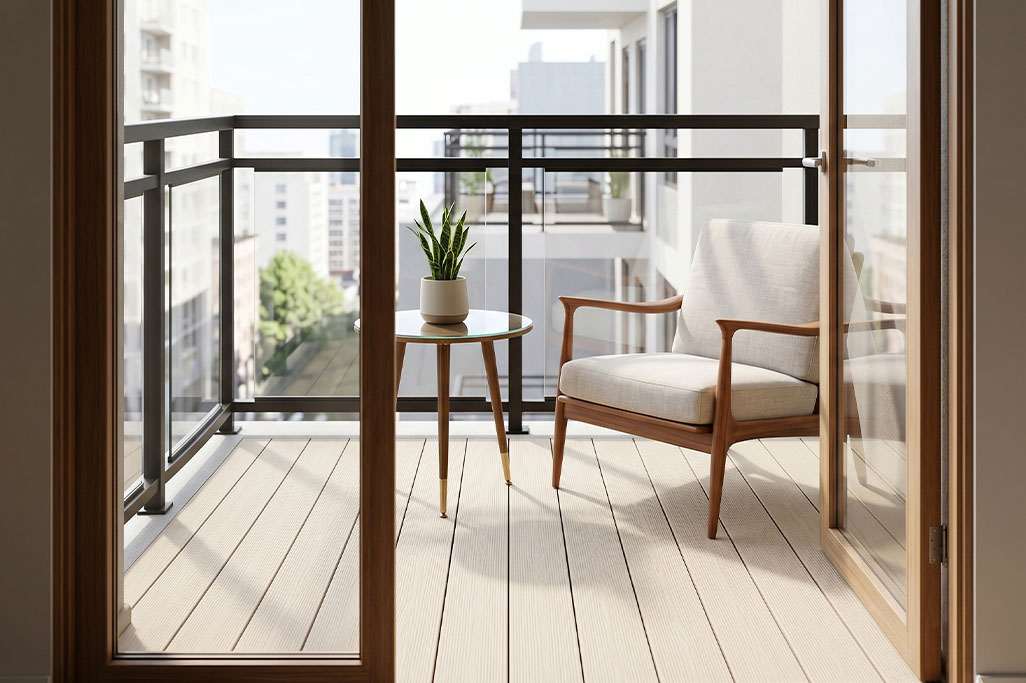
Apartment balconies with cracked concrete or worn tiles can be transformed with composite decking laid over the existing surface using composite battens or adjustable pedestals. This approach doesn’t require structural changes, making it suitable for renters and apartment owners alike (check your strata rules first). The raised deck surface also improves drainage and insulates against heat transfer from concrete.
Key considerations for balcony overlays include weight limits (check with your building management), drainage pathways (ensure water can still reach the balcony drain), and the height threshold at the door entry (you’ll lose 40–60mm of door clearance with a batten system). Always confirm structural suitability and load capacity with your building management or a qualified professional before installation.
4. Wraparound Step Deck
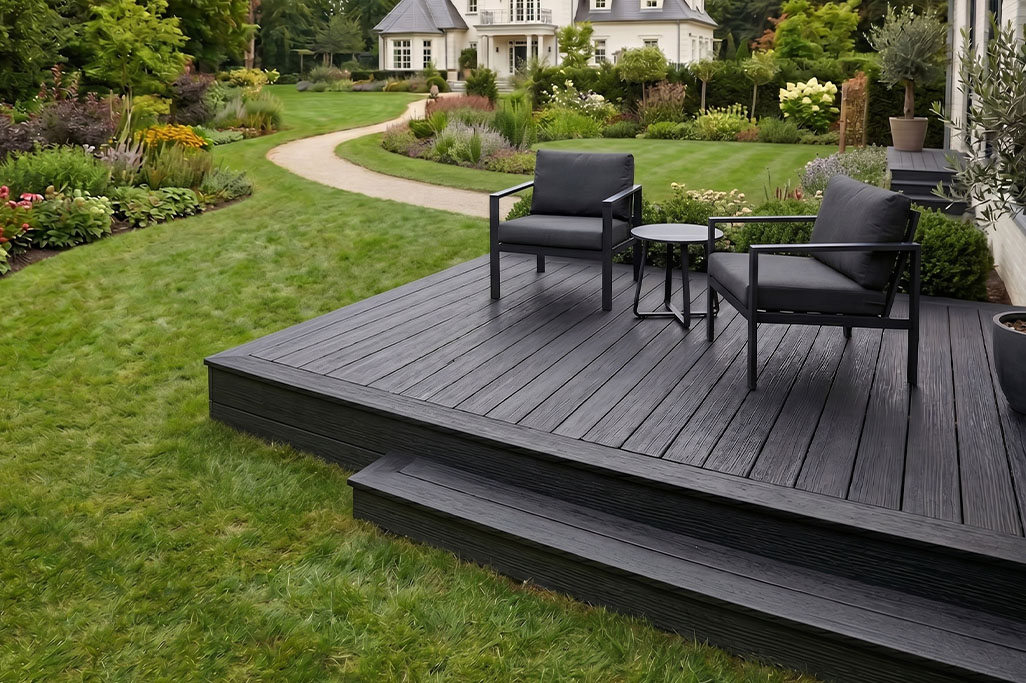
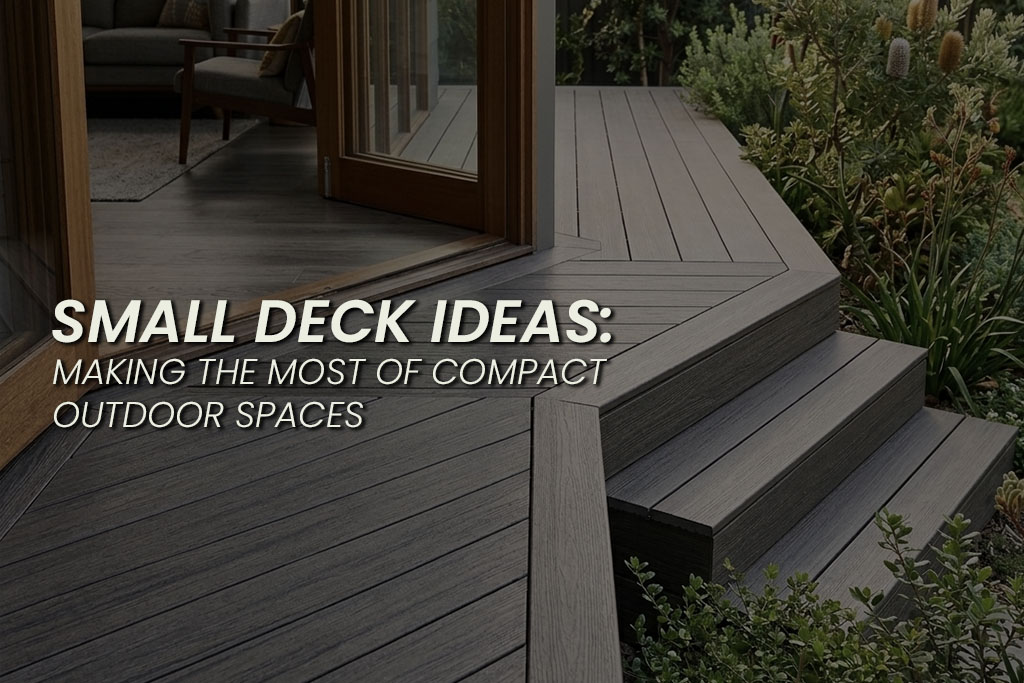
Instead of a single flat platform, design your small deck as a series of wide steps that wrap around a corner or follow the contour of your garden. Each level creates a different zone — the upper level for dining, the middle step for seating, the lower level as a transition to the garden. This tiered approach makes a small deck feel much larger than its footprint and creates visual interest.
5. Side Passage Transformation
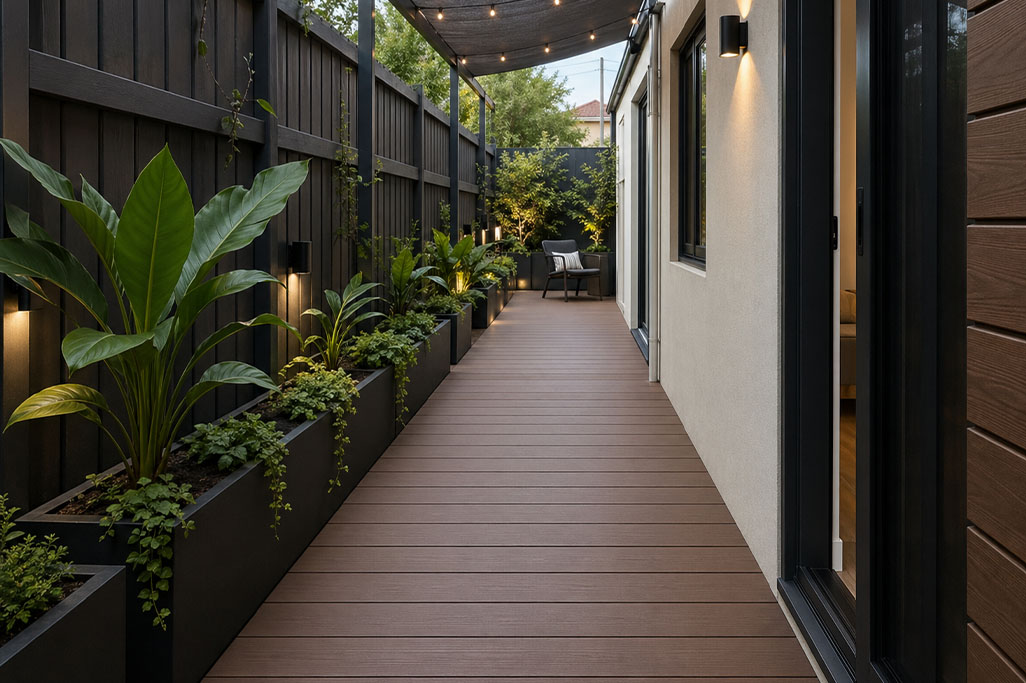
The narrow passage down the side of the house is one of the most underutilised spaces in Australian homes. A deck running the length of this passage (typically 1.2–2m wide) can create a sheltered walkway, an intimate garden corridor, or even a narrow entertaining strip. Line one side with planter boxes and the other with your fence, add overhead shade cloth, and you’ve created a space that feels like a private garden room.
6. Front Entry Deck
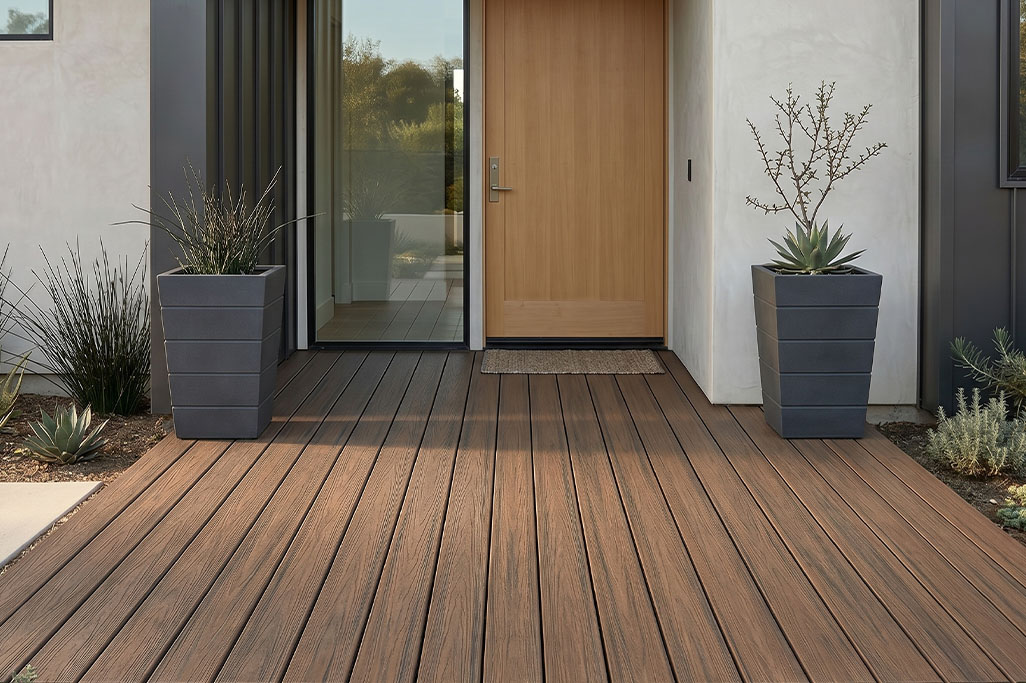
A small deck at the front entry — essentially a modern porch or stoop — creates kerb appeal and a welcoming transition into the home. A 2m x 3m composite deck with a couple of pot plants and a bench seat makes a simple but effective statement. This is particularly effective for homes where the front door opens directly onto a concrete path or bare ground.
7. Garden Island
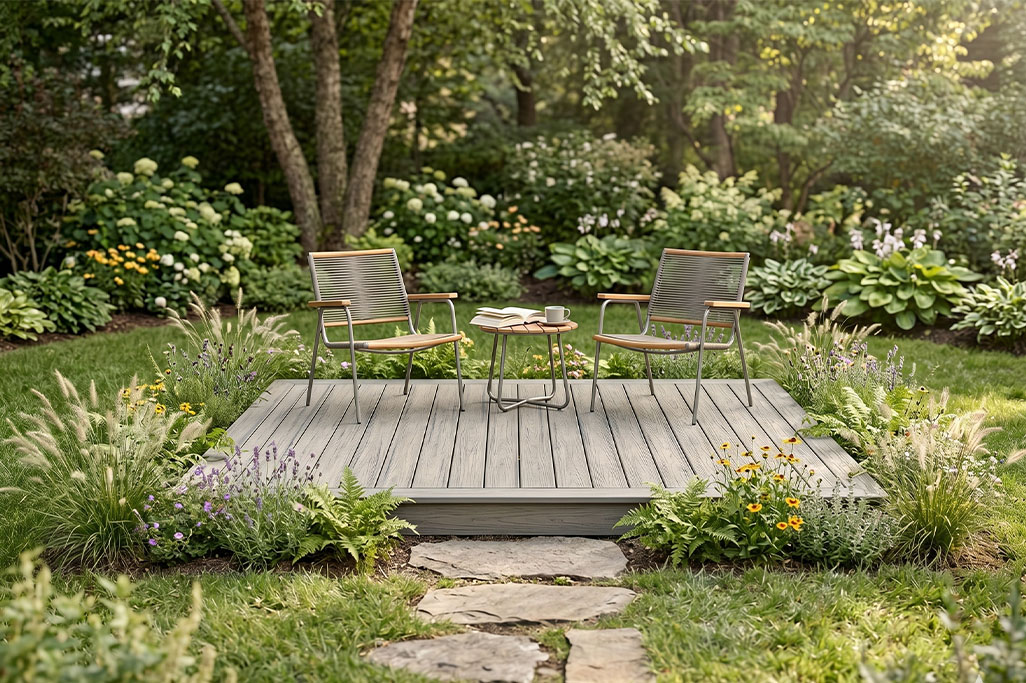
Place a small floating deck in the middle of your garden as a standalone feature surrounded by landscaping. This ‘island’ deck becomes a destination — a place to sit among the garden rather than looking at it from the edge. It works best with a stepping stone path leading to it and low planting around the edges. A 2m x 2m platform is enough for two chairs.
Space-Maximising Design Tips
Board Direction Matters
Lay boards lengthwise (running away from you) to make a narrow deck feel longer, or widthwise to make it feel wider. Diagonal board installation can make a small square deck feel more dynamic, though it does increase material waste by 10–15%.
Choose Lighter Colours
Light and mid-toned composite decking makes small spaces feel more open and airy. Dark colours can make a compact deck feel enclosed, especially in shaded areas. If you love the look of charcoal, consider using it for the fascia while keeping the deck surface a lighter shade.
Composite Decking Colours Guide →
Flush Edges, No Rails
Where safety allows, skip the balustrade and keep deck edges flush with the surrounding landscape. Rails and barriers make small decks feel enclosed and smaller than they are. Ground-level decks under 1m high typically don’t require a balustrade, which is another advantage of the floating deck approach.
Built-In Seating
Benches built into the deck edges serve double duty — they provide seating without consuming floor space, and they define the deck edge without the visual weight of a railing. The space under a built-in bench can also provide hidden storage for cushions and outdoor accessories.
Extend the Line
Visually connect your deck to the adjacent space. If the deck runs out from the house, extend the same board direction with a garden path. If it sits alongside a lawn, keep the deck edge at the same level as the grass for a seamless transition. These visual tricks make the overall space feel larger.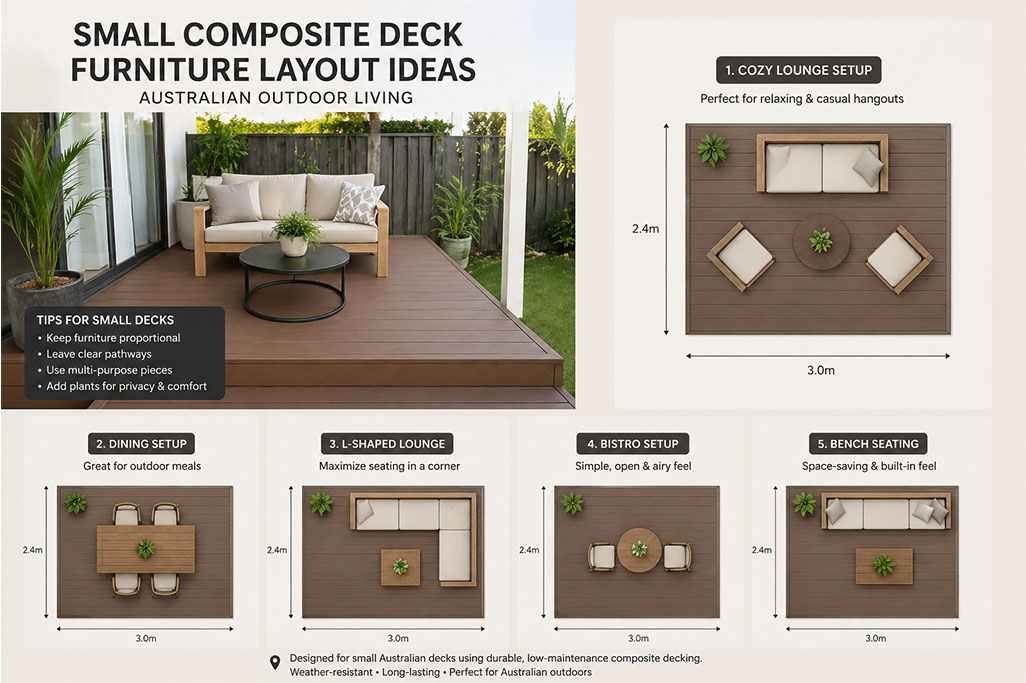
Multi-Functional Furniture
In small spaces, every piece of furniture should earn its place. Look for foldable tables, stackable chairs, and storage ottomans. A bar-height table along a railing takes up less floor space than a standard dining setting. Wall-mounted folding tables are excellent for small balcony decks.
Cost Guide for Small Decks
Small decks benefit from lower total costs but have a higher cost per square metre than larger projects because setup and mobilisation costs are spread over less area.
Deck Size | DIY Materials | Professionally Installed | Cost per m² (installed) |
Compact (4–6m²) | $800–$1,800 | $2,000–$3,500 | $400–$580 |
Small (6–10m²) | $1,200–$3,000 | $2,800–$5,000 | $350–$500 |
Medium-small (10–15m²) | $1,800–$4,500 | $3,500–$7,500 | $300–$480 |
*Indicative pricing only — varies based on site conditions, access, and design
These ranges assume mid-range capped composite decking with a treated pine subframe. Premium products and hardwood or steel subframes will be at the higher end. Ground-level floating decks are at the lower end because they eliminate footing costs.
Composite Decking Cost Guide 2026 →
Why Composite Works Best for Small Decks
Composite decking is particularly well-suited to small deck projects for several practical reasons. Low maintenance matters more in small spaces — the hassle of dragging furniture off a small deck for annual oiling is proportionally more disruptive. A low-maintenance composite surface means you use the space more and spend less time maintaining it.
Consistent appearance is more noticeable at close range. On a large deck, natural timber variation looks organic. On a small deck, warping, splitting, and weathering are more visible and harder to ignore. Composite’s consistent colour and flat, splinter-free surface looks better in tight quarters.
Moisture resistance matters at ground level. Small floating decks and courtyard platforms sit close to the ground where moisture exposure is highest. Composite is generally more resistant to moisture-related issues than traditional timber.
Finally, the DIY-friendly nature of composite saves money on small projects where the labour cost of hiring a professional is proportionally higher.
Composite vs Timber Decking — Full Comparison →