Edging is the finishing detail that separates a deck that looks thrown together from one that looks professionally built. You can lay every board perfectly, nail every joist spacing and get the subframe dead level, but if the edges are left raw, the whole thing falls flat.
Composite decking edging covers the exposed ends of your boards, hides the subframe and gives your deck a polished, complete appearance. It also serves a practical purpose by covering cut board ends, reducing visible gaps, and helping prevent leaves, dirt and debris from collecting around open board profiles.
Whether you are building your first deck or upgrading an existing one, getting the edges right is worth the extra effort. This guide walks through every edging option available, how to install the most common types, what they cost and the mistakes to avoid.
How to Install Composite Decking →
Why Composite Decking Edging Matters
Skipping the edging is one of the most common shortcuts on DIY deck builds. Here is why it matters more than you might think.
Hides the subframe. Without edging, the timber or steel joists and bearers are visible from the side. This is especially noticeable on raised decks where the frame is exposed.
Covers exposed board ends. When composite boards are cut, the internal profile may be visible. Edging covers these ends, creates a cleaner finish and helps reduce dirt, leaves and debris collecting around open board profiles.
Prevents debris build-up. Open board ends create gaps where leaves, dirt and insects can enter the subframe area. Edging seals these off.
Creates a clean finished look. Edging turns a collection of boards into a cohesive surface. It frames the deck visually and gives it a defined boundary.
Types of Composite Decking Edging
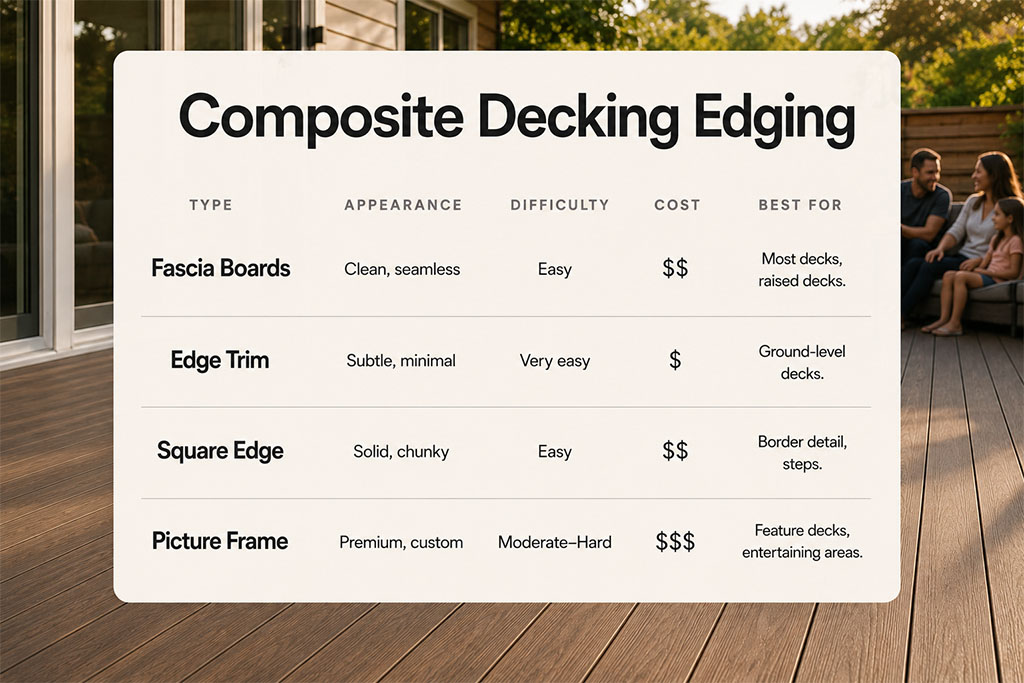
There are four main approaches to finishing the edges of a composite deck. Each has a different look, cost and level of difficulty.
1. Fascia Boards
Fascia boards are one of the most common composite decking edging solutions in Australia. These are flat finishing boards that wrap around the outer face of the deck frame. They cover the joists, bearers and the cut ends of the deck boards in one clean panel.
2. Edge Trim / Angle Trim
Edge trim profiles are L-shaped strips that cap the ends of the deck boards. One leg sits on top of the board surface while the other drops down over the cut end. They are a quick, low-cost solution when you do not need to cover the full depth of the subframe.
Edge trim works best on ground-level decks where the frame is not visible from the side.
3. Square Edge Boards
Some composite boards have a flat, square edge profile rather than a grooved one. Some projects use square-edge, bullnose or purpose-made edge boards to create a more substantial perimeter detail. Check that the chosen profile is suitable for the intended fixing method and application.
Square edge boards are also useful where you need a visible top surface along the edge, as they match the deck boards exactly.
4. Picture Frame Border
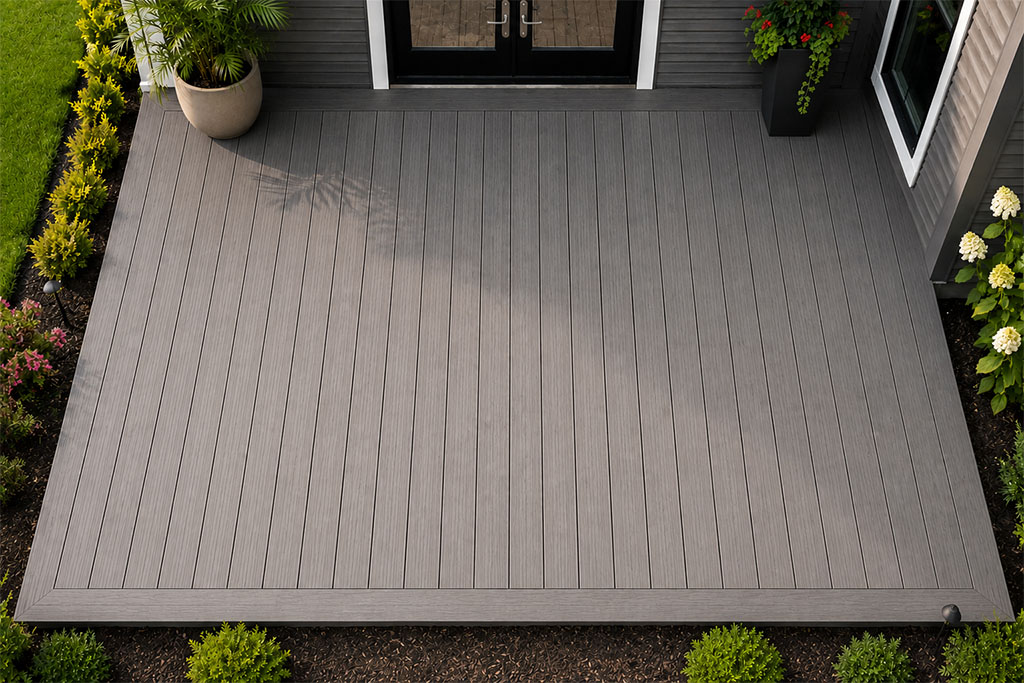
A picture frame border uses full deck boards laid perpendicular to the main field boards around the entire perimeter. Think of it as a frame around a painting. The border boards run in the opposite direction to the field, creating a visual contrast that adds a premium, custom look.
This is the most visually impressive edging option but also the most complex to build. It requires additional joists to support the border boards and careful planning for expansion gaps at the direction change.
Edging Comparison Table
How to Install Fascia Boards
Fascia boards are the go-to edging method for most Australian deck builds. Here is how to fit them.
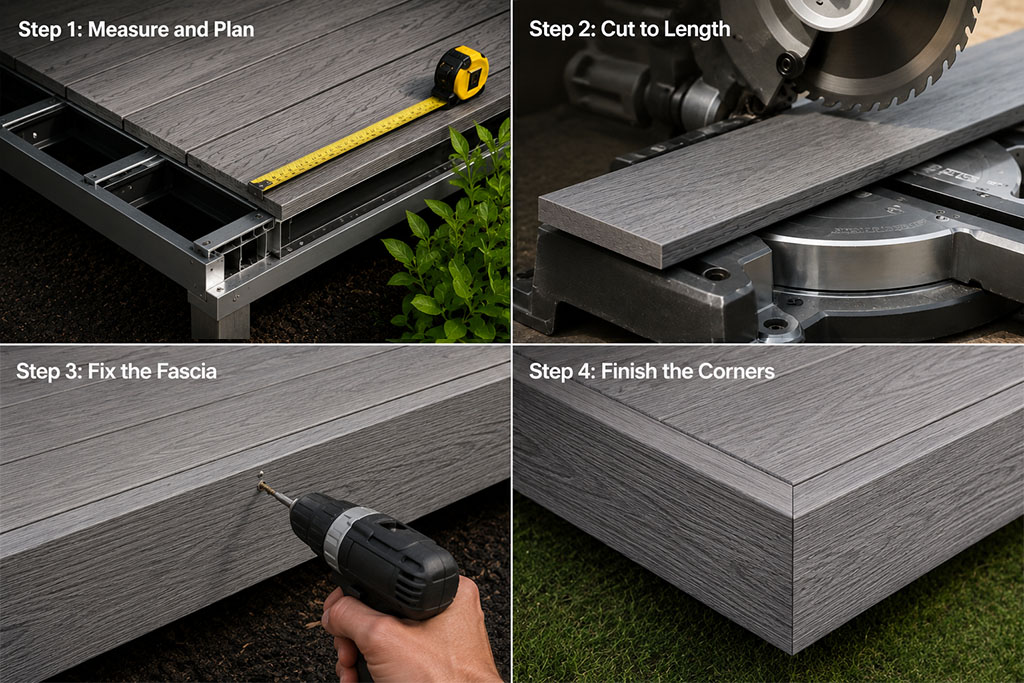
Step 1: Measure and Plan
Measure the full perimeter of your deck. Note any corners, steps or direction changes. Add 10% for waste and mitre cuts. If your deck has outside corners, you will need 45-degree mitre joints where fascia boards meet.
Step 2: Cut to Length
Use a mitre saw or circular saw with a fine-tooth blade to cut fascia boards to length. For corners, cut matching 45-degree mitres on adjoining pieces.
Step 3: Fix the Fascia
Hold the fascia board against the frame so it is face-fitted just below the deck edge, in line with the Brite Decking installation guide.. Pre-drill and fix using suitable stainless steel screws at the spacing recommended in the relevant Brite Decking installation guide.
Fascia boards should be fixed into the subframe and joist, never directly into the decking board.
Step 4: Finish the Corners
At outside corners, bring both mitre-cut fascia pieces together tightly. Follow the Brite Decking installation guide for fascia fixing, including pre-drilling, screw spacing and expansion allowances. On inside corners, butt the pieces together with a small expansion gap (2-3 mm).
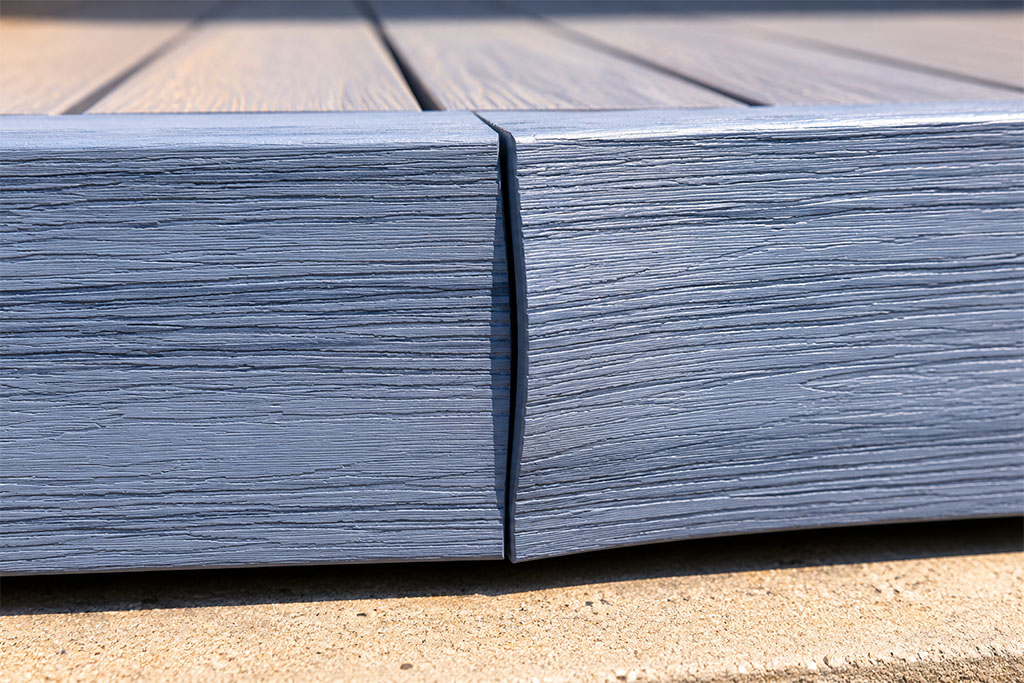
Tip: If installing multiple fascia boards in a row, leave approximately 2 mm butt-joint expansion on either side, or slightly larger in cooler installation temperatures, in line with the Brite Decking installation guide.
How to Create a Picture Frame Edge
A picture frame border is worth the extra planning if you want a high-end look.
Layout Planning
Before you start laying field boards, the border needs to be part of your joist layout. The border boards run perpendicular to the field boards, so they need their own joist support running in the opposite direction. Add a double joist or blocking where the field boards meet the border.
Install the Border First
Lay the perimeter border boards first, fixing them to the outer joists. Make sure the border is square and level before moving inward. Use spacers to maintain consistent expansion gaps between the border and the first field board.
Fill with Field Boards
Work inward from the border, installing field boards as normal. The last field board may need to be ripped down to fit. Always follow the expansion gap requirements in the relevant Brite Decking installation guide, as spacing can vary depending on board type, temperature, run length and installation conditions.
Edging for Different Deck Situations
Ground-Level Decks
On low decks sitting close to the ground, the subframe is barely visible. Edge trim or a simple fascia board is usually enough. Make sure there is still adequate ventilation under the deck surface.
Raised Decks
Raised decks expose the full depth of the frame, making fascia boards an important finishing detail. For taller raised decks, fascia may need to be combined with a suitable skirting or cladding solution. Brite Decking fascia boards should not be used to clad large vertical areas, so project-specific advice should be sought for higher vertical finishes.
Pool Surrounds
Pool decks need edging that can handle constant moisture and splashing. Composite fascia boards handle this well, but pay extra attention to expansion gaps. Pool areas see large temperature swings between hot sun and cool water, so boards expand and contract more than usual.
Decks Against Walls
Where your deck meets a wall or fence, use a wall trim profile or simply leave a 10-15 mm expansion gap. This gap can be covered with a right-angle trim strip for a neat finish.
Cost of Composite Decking Edging in Australia
Here is a rough guide to edging costs as of 2026. Prices vary by brand, colour and supplier.
Fascia boards: $20 to $40 per linear metre. This is the standard choice and covers most of the price range. Premium brands and darker colours tend to sit at the higher end.
Edge trim / angle trim: $10 to $25 per linear metre. A budget-friendly option for simpler edge details.
Picture frame border: Adds roughly 10-15% to your total material cost. The extra expense comes from the additional boards and the extra joists or blocking needed to support them.
For a typical 20 square metre deck with a 20-linear-metre perimeter, fascia board edging adds approximately $400 to $800 to the total build cost.
Common Composite Decking Edging Mistakes
Forgetting expansion gaps. Composite materials expand and contract with temperature changes. Every join between fascia boards or trim pieces needs a 2-3 mm gap. Skip this and you will get buckling or cracking in summer.
Poor mitre joints at corners. Rough or inaccurate mitre cuts are the most visible flaw on a finished deck. Use a sharp, fine-tooth blade and test-fit before fixing.
Mismatched colours. Fascia boards and deck boards from different production batches can vary slightly in colour. Order all your materials at the same time from the same batch where possible.
Not accounting for edging in initial measurements. If you plan the deck surface without considering the edging, you may end up short on joist overhang or frame width. Factor in fascia board thickness (typically 12 mm per side) during the design phase.
Using incompatible fixings. Stainless steel screws are non-negotiable in Australian conditions. Standard steel screws will rust and stain the composite surface within months.
Finish Strong
Edging is a small part of the total build but it has an outsized impact on how the finished deck looks and performs. Whether you go with simple fascia boards or a full picture frame border, getting the edges right is what makes a deck look intentional rather than unfinished.
If you are still in the planning stage, request free samples to compare edging options against your chosen deck colour. It is much easier to make decisions with the materials in hand.