Your deck is an extension of your home. Get the design right, and it becomes the space you actually want to spend time in, not just a timber platform bolted to the back of the house. Whether you have a sprawling backyard, a narrow courtyard, or a fifth-floor balcony, the right decking idea can transform dead space into your favourite room.
Below, we have gathered 15+ outdoor decking ideas suited to Australian homes, climates, and lifestyles. Each one includes practical tips so you can move from “that looks nice” to “here is how we build it.”
Brite Decking offers a range of composite decking options to suit different outdoor spaces, from cost-effective backyard projects through to premium feature decks. Urban X, HD PRO and NextGen Titanium each suit different budgets, design goals and performance requirements.
Entertaining and Lifestyle Decks
1. The Alfresco Dining Deck
Picture a dedicated outdoor dining zone with enough room for a full table setting, bench seating along one edge, and pendant or festoon lighting overhead. This setup works best when you position the deck close to your kitchen for easy food service.
Practical tip: Build the deck at the same height as your interior floor so guests flow naturally between inside and out. Composite decking is well suited to alfresco areas because everyday spills can usually be cleaned with warm soapy water when addressed promptly.
How to Care for Your Composite Deck →
2. Outdoor Kitchen Deck
Take the alfresco concept further with a built-in BBQ station, prep bench, and storage. Composite decking can work well in outdoor entertaining areas, but BBQs and cooking zones should be planned carefully. Use suitable protection under cooking appliances, keep heat sources raised from the deck surface, and clean grease or oil spills promptly.
Practical tip: Allow at least 1.5 metres of clearance around the BBQ for safe movement. Choose mid-tone or darker boards in the cooking zone to disguise wear patterns from foot traffic.
3. Multi-Level Entertaining Deck
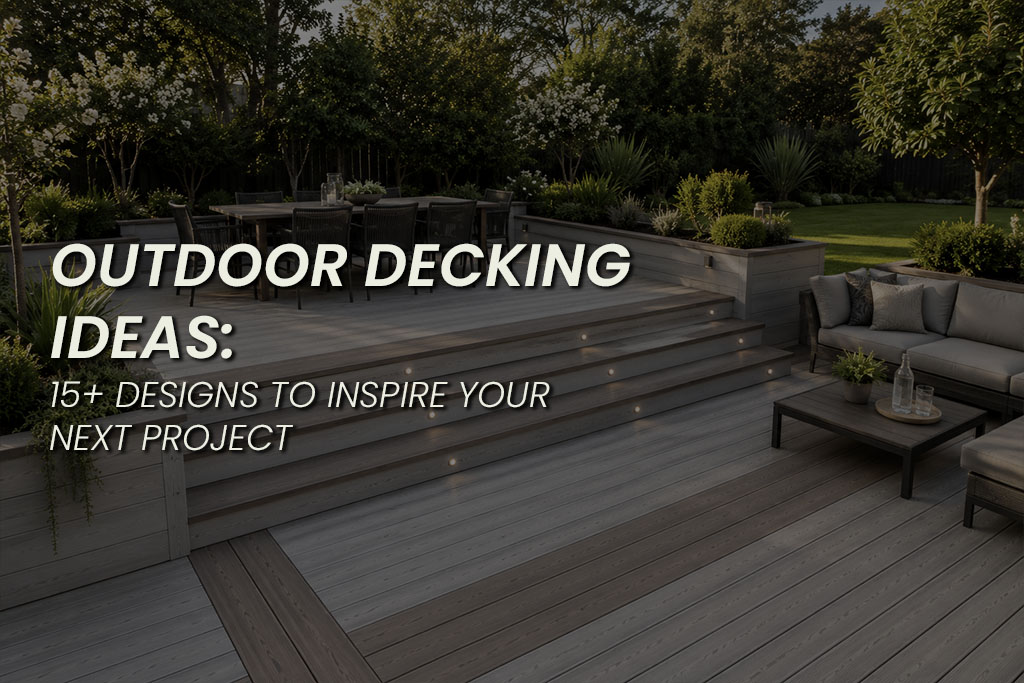
Split-level decks create natural zones without walls. A raised dining platform steps down to a lounge area, which flows into the garden. The level changes give each area its own identity while keeping the whole space connected.
Practical tip: Keep level changes to one or two steps (around 150 to 300mm) so the transitions feel seamless rather than dramatic. Integrated LED strip lighting on step edges adds safety and atmosphere.
Explore Composite Decking Colours →
Pool and Water Decks
4. Pool Surround Deck
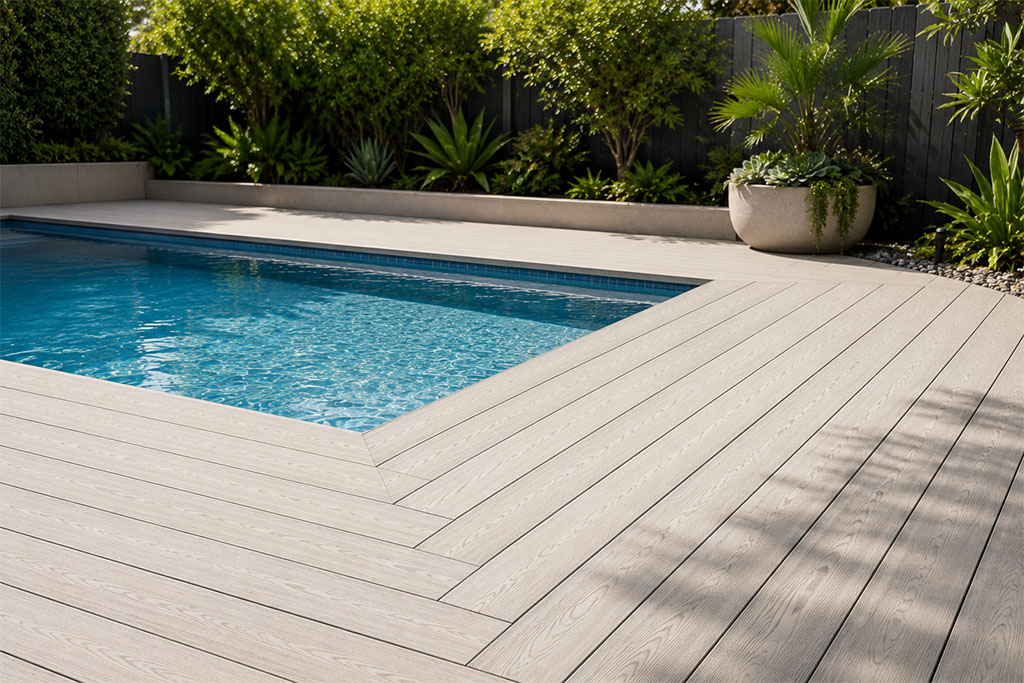
Composite decking is a natural fit around pools. It is slip-resistant when wet, completely splinter-free (critical for bare feet), and stands up to chlorine and salt water without corroding or greying. Lighter colours stay cooler underfoot in summer, which matters in Australia more than most places.
Practical tip: Ensure your deck surface sits level with or slightly above the pool coping for a clean, integrated look. Drainage gaps between boards handle splash-out without pooling.
Composite Decking Australia →
5. Spa or Hot Tub Deck
A built-in deck surround turns a freestanding spa into a permanent feature. The deck frames the tub, hides plumbing, and provides a step-up platform.
Practical tip: Hot tubs are heavy. A full spa can weigh over 1,500 kg, so you need engineered subframe support designed for the load. Include a removable access panel in the decking so plumbers can reach the equipment without pulling up the entire deck.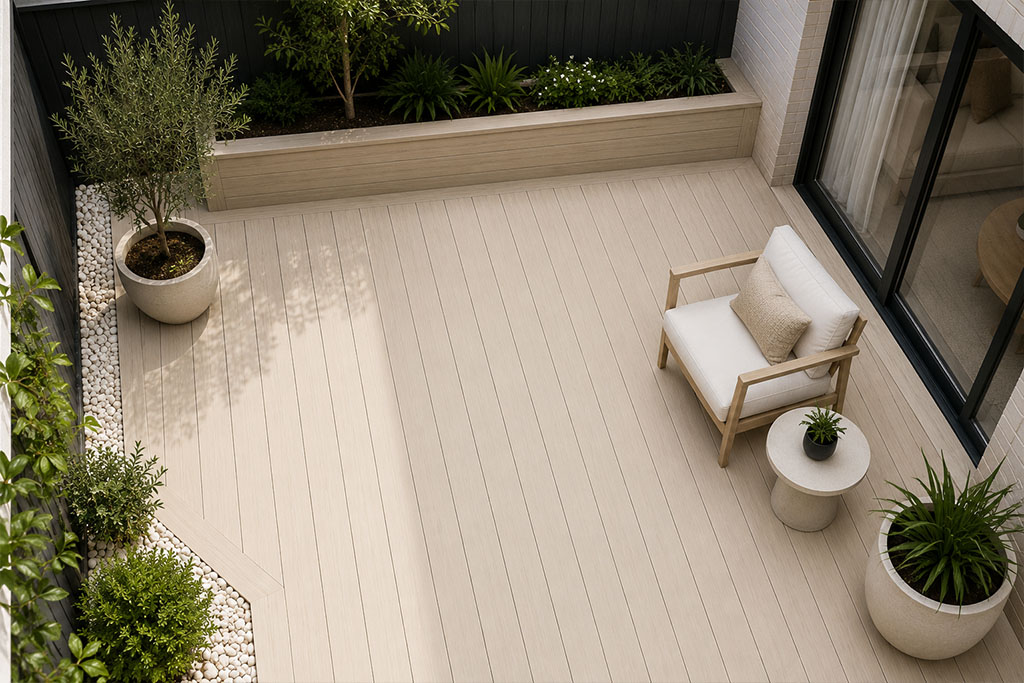
Small Space Decks
6. Courtyard Deck
Tight courtyard? A deck can make it feel twice the size. Lay boards lengthwise to draw the eye and create a sense of depth. Lighter composite colours, such as sandstone or natural oak tones, reflect more light and open up enclosed areas.
Practical tip: In very small courtyards, keep the deck at ground level and run it wall to wall. This eliminates visual clutter and makes the space feel like a single, unified room. Small Deck Ideas for Compact Spaces →
7. Balcony Transformation
If you are staring at a tired concrete balcony, composite decking may be suitable over the existing surface, provided the structure, waterproofing, drainage, height clearances and strata or body corporate rules are checked first.
Practical tip: Check your strata or body corporate rules before starting. Some balcony overlay systems may be relatively low-disruption, but approval requirements vary depending on the building, strata rules and installation method.
8. Side Passage Deck
That narrow strip down the side of your house is probably collecting cobwebs and old pots right now. A simple decking platform turns it into a walkway, a herb garden corridor, or even a slim reading nook with a bench.
Practical tip: Measure carefully. Side passages are often only 900mm to 1,200mm wide, so every centimetre counts. Running boards lengthwise along the passage makes it feel longer and more intentional.

Modern and Contemporary Decks
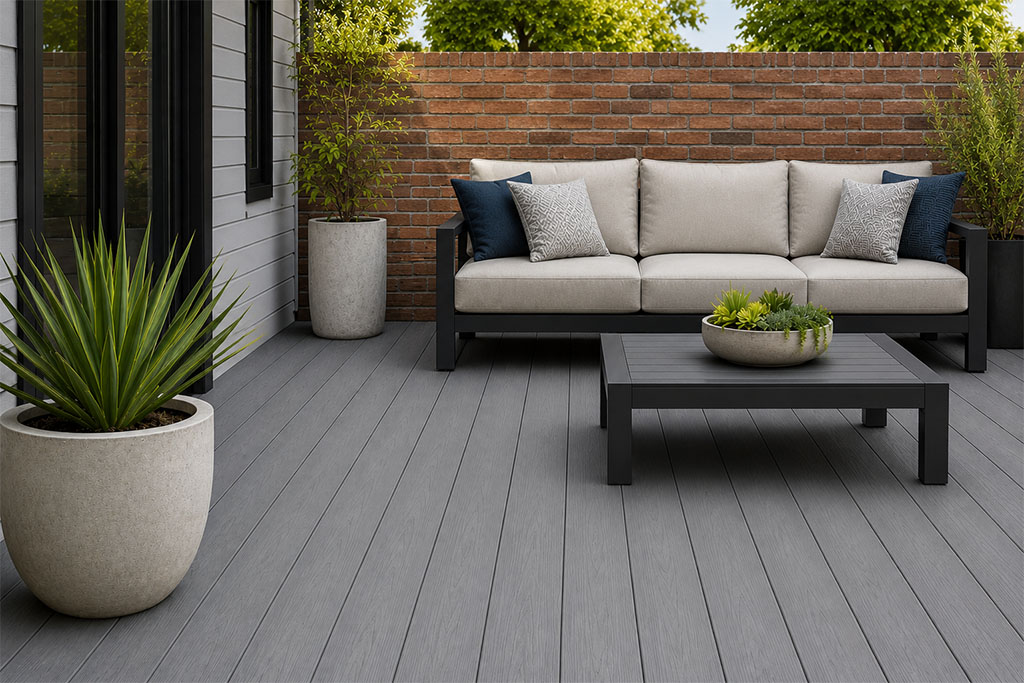
9. Minimalist Grey Deck
Charcoal, slate, and silver-grey composite boards paired with clean lines, simple planters, and minimal furniture create a sleek, contemporary outdoor space. This look suits modern architecture particularly well.
Practical tip: Grey decking photographs beautifully and stays on-trend, but remember that very dark boards absorb more heat. In full-sun areas, consider mid-grey rather than charcoal.
Composite Decking Colours →
10. Indoor-Outdoor Flow
Match your deck colour as closely as possible to your interior flooring, then install flush thresholds where the door meets the deck. The visual effect is striking: the indoor floor appears to continue straight outside.
Practical tip: Composite decking colour ranges have expanded significantly, so finding a close match to popular indoor tile or timber-look flooring is easier than you might expect. Bring a sample of your indoor floor when choosing deck boards.
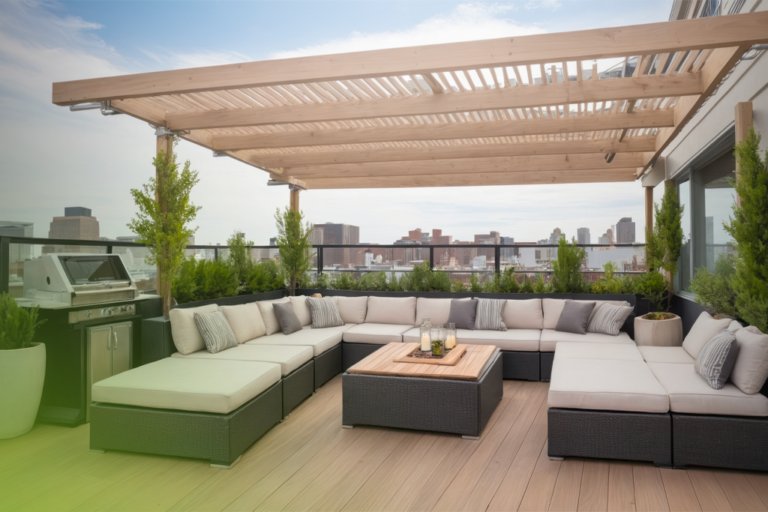
11. Rooftop Deck
Urban apartments and townhouses with flat roof access can gain a whole new entertaining space. Composite boards on adjustable pedestal systems create a level surface over uneven rooftops and allow water to drain beneath.
Practical tip: Rooftop decks need to account for wind uplift, weight limits, and waterproof membrane protection. Always get an engineer’s sign-off. The upside is that composite requires infrequent maintenance in a location where maintenance is genuinely difficult.
Composite Decking Maintenance Guide →
Classic and Natural Decks
 Classic and Natural Decks
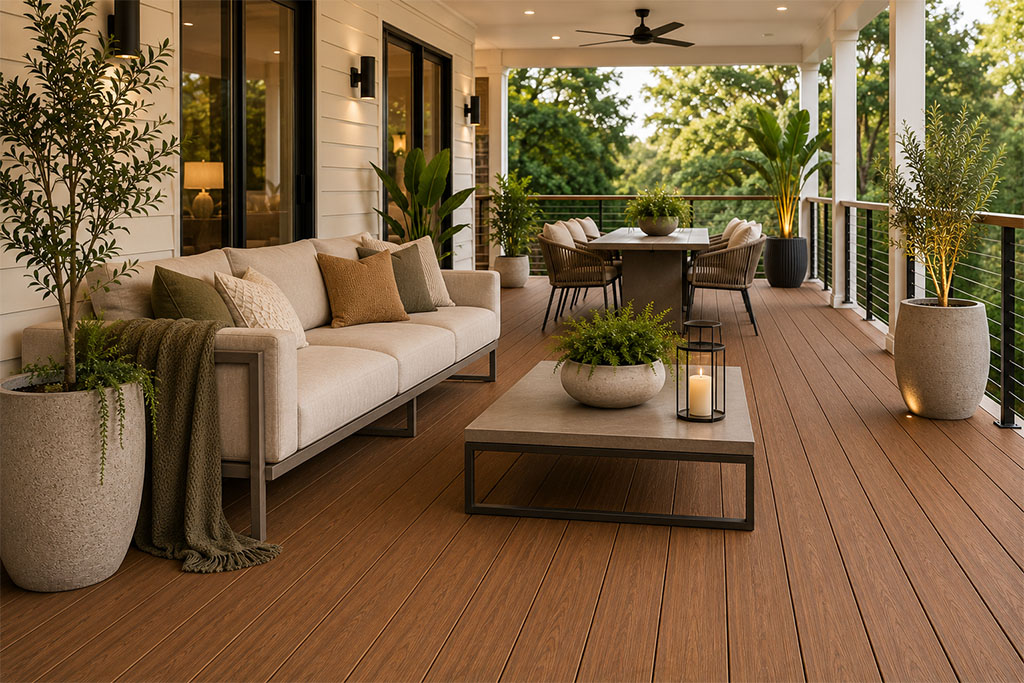
12. Wraparound Verandah
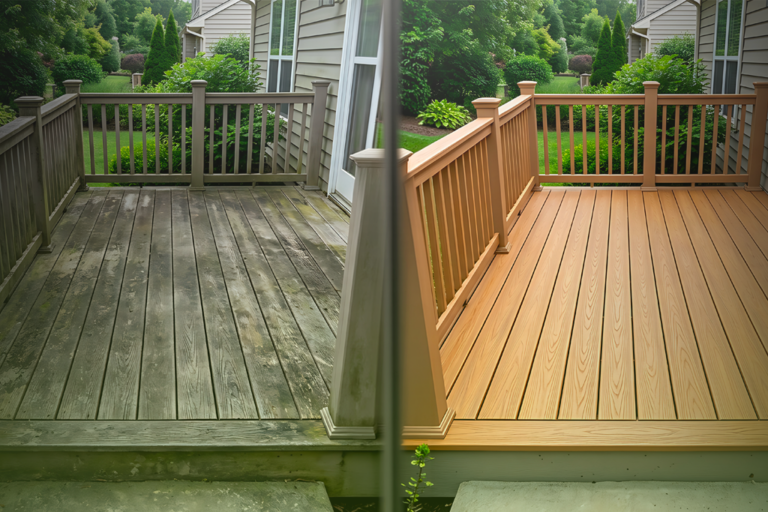
The classic Australian verandah never goes out of style. Warm timber-look composite boards in teak, jarrah, or spotted gum tones give you the traditional aesthetic without the annual sanding and oiling ritual.
Practical tip: Wrap the deck around two or three sides of the house to create shaded morning coffee spots and afternoon sun traps depending on the season. Composite boards are designed to reduce common timber issues such as cupping, cracking and splintering, provided they are installed correctly with the required spacing, ventilation and fixing system.
Why Choose Composite Decking →
13. Garden Deck with Built-In Planters
Integrate raised planter boxes directly into the deck structure to blur the line between garden and living space. This creates defined “garden rooms” and works especially well in flat backyards that lack natural landscaping interest.
Practical tip: Use composite offcuts for the planter surrounds so everything matches. Line the inside of planters with waterproof membrane to protect the subframe from moisture.
14. Curved Deck Design
Organic, curved edges give a deck a softer, more natural feel. Composite boards can be cut to follow curves and irregular shapes, which is harder (and more wasteful) with natural hardwood.
Practical tip: Curves look best when they follow the natural contour of your garden, a tree line, or a garden bed. Avoid curves for the sake of curves; they should feel like they belong.
Functional Decks
 Functional Decks
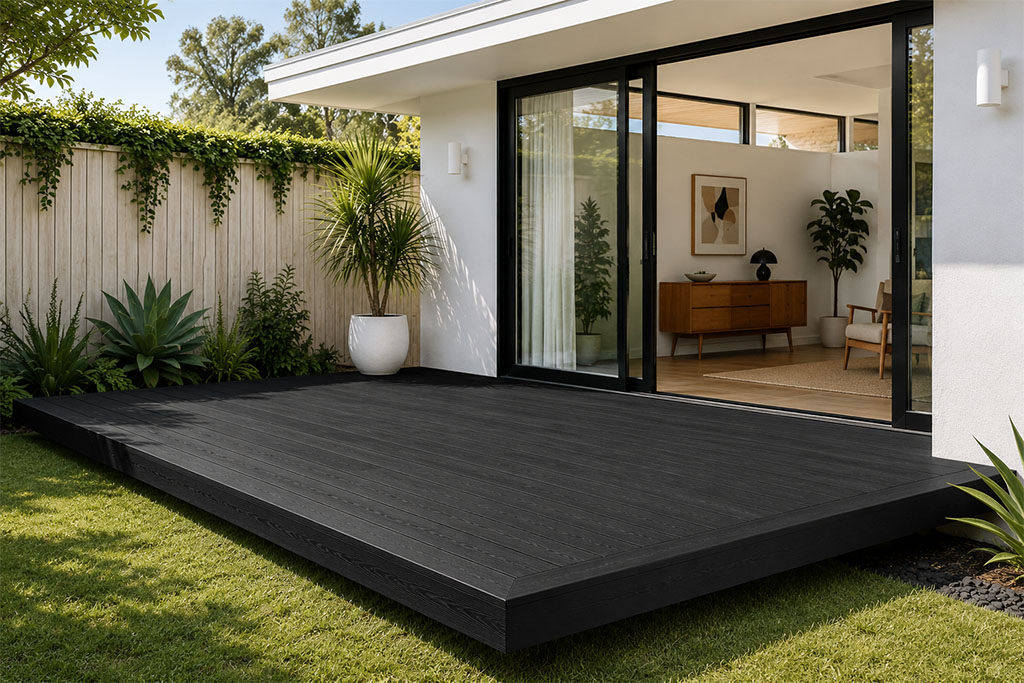
15. Ground-Level Floating Deck
A deck built at or near ground level may not require approval in some areas, but rules vary by council, height, size, boundary setbacks and site conditions. It sits directly over the ground on a basic joist frame.
Practical tip: This is a realistic weekend DIY project for a confident builder. Ground-level decks need good airflow underneath to prevent moisture buildup, so leave gaps for ventilation.
DIY Composite Decking Guide →
16. Elevated Deck with Storage Underneath
A raised deck creates usable space beneath it. Store outdoor furniture, gardening equipment, bikes, or bins in the sheltered area below the deck platform.
Practical tip: Add lattice screening or access doors beneath the deck to keep the storage tidy and pest-free. If the deck is high enough to stand under, the space below may be useful for storage or as a covered outdoor zone, subject to design, drainage and approval requirements.
How to Install Composite Decking →
How to Choose the Right Deck Design
Before you pick a style, work through these six questions:
- How will you use it? Entertaining, relaxing, dining, play area for kids? Your primary use case should drive the layout.
- What suits your property style? A minimalist grey deck on a Queenslander cottage will look odd. Match the deck character to the home.
- Sun orientation. North-facing decks get full sun in winter (ideal). West-facing decks cop harsh afternoon heat in summer (consider shade structures or lighter board colours).
- What are your views? Orient seating and focal points toward the best view, even if that means the deck faces an unexpected direction.
- Budget. Be honest about what you can spend. A well-built small deck beats a half-finished large one.
- Council requirements. Decks over certain heights, close to boundaries, attached to dwellings, near pools, in bushfire zones, or on restricted sites may require approval. Check with your local council before committing to a design.
Composite Decking Cost Guide →
Colour Trends for 2026
Grey tones are still the most popular choice across Australia, particularly in contemporary builds. Charcoal and mid-grey boards dominate new projects in Sydney, Melbourne, and Brisbane.
That said, warm naturals are making a strong comeback. Teak and spotted gum tones appeal to homeowners who want the warmth of timber without the upkeep. These warmer shades pair well with natural stone, brick, and garden settings.
Two-tone designs are also gaining traction. A contrasting border, such as a charcoal frame around a lighter field, adds visual interest without complexity. Picture framing (a border board running perpendicular to the main deck boards) is a simple technique that makes any deck look more considered and finished.
Browse All Composite Decking Colours →
Budget Ranges by Project Type
These are rough guides for composite decking projects in Australia (materials and installation):
- Simple ground-level deck (15 to 20 sqm): From $5,000. A straightforward platform with basic subframe.
- Mid-range entertaining deck (20 to 40 sqm): $10,000 to $20,000. Includes features like steps, built-in seating, or lighting.
- Premium multi-level deck (40+ sqm): $20,000 and up. Multiple levels, integrated planters, custom designs, and premium finishes.
Want a more specific figure? Use the Brite Decking price calculator to estimate your project cost in minutes.